
Wax and Rhythm of Care
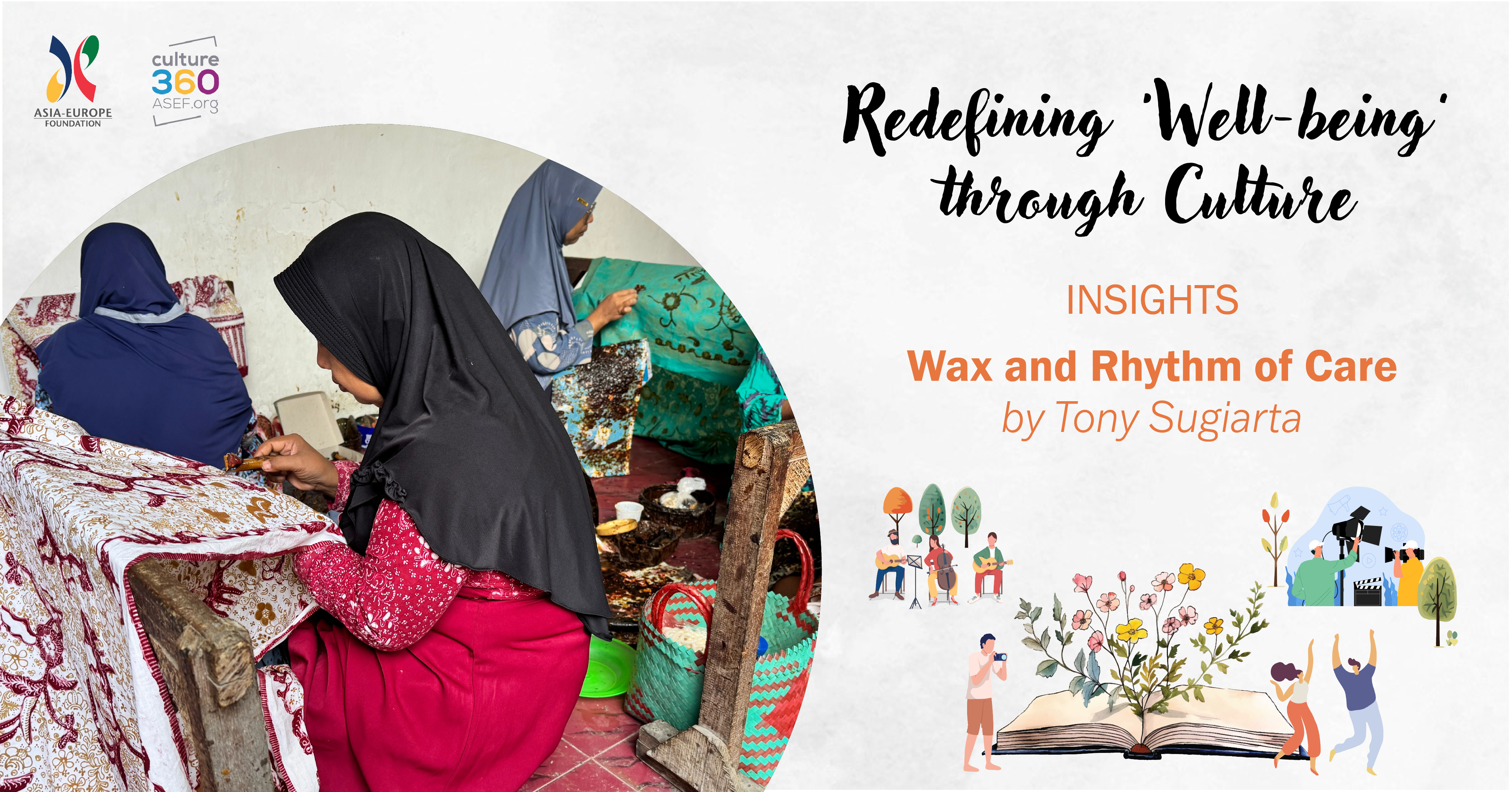
Beyond creating beautiful works of wearable art, batik can also be a practice of well-being. Tony Sugiarta sheds light on how this ancient craft cultivates mindfulness, spiritual connection and communal care – through embodied cultural traditions.
This article is commissioned as part of culture360.ASEF.org's Redefining 'Well-being' through Culture open call. Through a series of articles, video interviews and podcasts, we delve into the multidimensional contribution of culture towards good physical health, mental health, individual and societal well-being.
Batik is a textile decorating technique that uses hot wax as a dye resist, applied using a tool called a canting (a pen-like batik tool) or a cap (a stamp). In 2009, Indonesian batik was inscribed on the UNESCO List of Intangible Heritage, recognising its rich history and cultural significance.
Beyond its visual beauty, batik is a communal artform sustained through social exchange, shared knowledge and collaborations across artisan and artist communities. Embedded within these long-standing practices is a wealth of local wisdom, including how batik-making cultivates mindfulness, resilience and a deep sense of connection between self, community and environment.
Breathing with Batik
By design, batik demands mental presence. Working with hot wax inherently requires concentration for safety and executing intricate patterns calls for precision. Mistakes are time-consuming to fix or, at times, irreparable.
“One breath, one stroke,” a mantra ingrained in me since the first time I picked up a canting.
Breath control, though often overlooked, is essential in batik-making. It is a biological clock to determine the time to take a break and to fill the canting with fresh, hot wax. Following the rhythm of the breath calms the mind and stabilises the hand, allowing for steady, even lines. Over time, this synchronised breath and movement foster a meditative state, grounding the artist in the present moment.
_by_brahma_tirta_sari_image_credit_tony_sugiarta.jpg(1).png)
1. Father Sky and Mother Earth (2024) - a mixed media artwork by Brhma Tirta Sari representing nature in batik. Photo © Tony Sugiarta.
Tribawana: Spiritual Connection to Nature
Traditional batik processes are deeply embedded in ecological systems, where the availability of natural materials and the weather play important roles in the creation process. It is a dance between human and nature.
Brahma Tirta Sari, an artist collective from Yogyakarta comprising Agus Ismoyo and Nia Fliam, grounds their creative practice in Tribawana, an ancient Javanese philosophy. Drawn from the text Suluk Ambatik, Tribawana reflects the interconnection between three “worlds”: Jagad Alit (the microcosm of individual spiritual consciousness) and Jagad Ageng (the macrocosms of nature or surrounding environment) connected through an intangible force of the unseen divinity, the Source of Creativity.
From developing patterns to handling tools, the practice is guided by rasa, an intuitive inner sensibility, and a deep spiritual engagement with nature. The practice of Tribawana is associated with concentration, contemplation and meditation. It begins with attentiveness: what do you feel when you breathe in the fresh mountain air, when you step on soil or when you taste the salty breeze of the sea? Coupled with body movements and breathwork, this sensitivity forms the foundation of creations, expressed through thought, language and action.
Nature is a blessing. It offers more than materials, it is a wellspring of inspiration, knowledge and balance. Through cultivating a relationship with nature, batik artists can nurture a form of ecological and spiritual well-being, sustaining practices that are both culturally rooted and environmentally attuned.
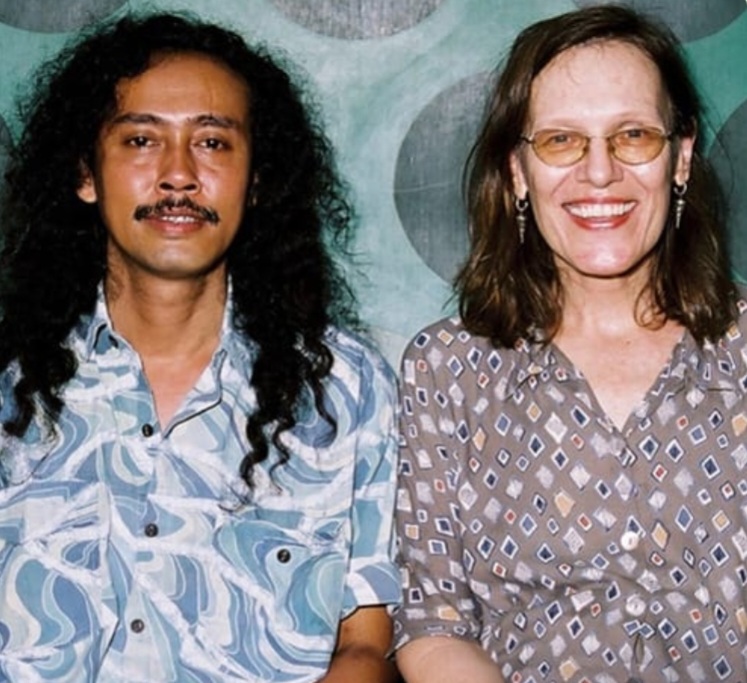
2. Brahma Tirta Sari, comprising Agus Ismoyo and Nia Fliam, ground their contemporary art practice in traditional Javanese philosophy. Photo © Brahma Tirta Sari.
Melody of Faith
200km northeast of Yogyakarta in Kalipucang Wetan, Batang Regency, Central Java, Indonesia, a group of women are chanting hymn while working with their canting. They are making Batik Rifaiyah, a batik tradition rooted in the teachings Islamic cleric Ahmad Rifai. Batik-making is used as a medium to spread his teaching and to observe zikir, the remembrance of God.
Batik-making is a meaningful activity for women to fit into the rhythm of domestic life. They gather regularly to sing the Quran verses while waxing the cloth. It embeds rhythms, intention and devotion into each stroke. The melodic recitations quiet the minds from the day’s harbinger and anchor attention in the present task. The synchronised rhythm is a collective cadence. The process becomes both meditative and relational, an experience of being with oneself and others simultaneously.
Equally important is the sense of camaraderie that emerges from these gatherings. Batik-making becomes a social space where knowledge is exchanged, stories are shared and relationships are nurtured. Knowledge, skills and traditions are passed down from mothers to daughters and peers. In this way, batik practices offer a model of community care rooted in togetherness and mutual support.
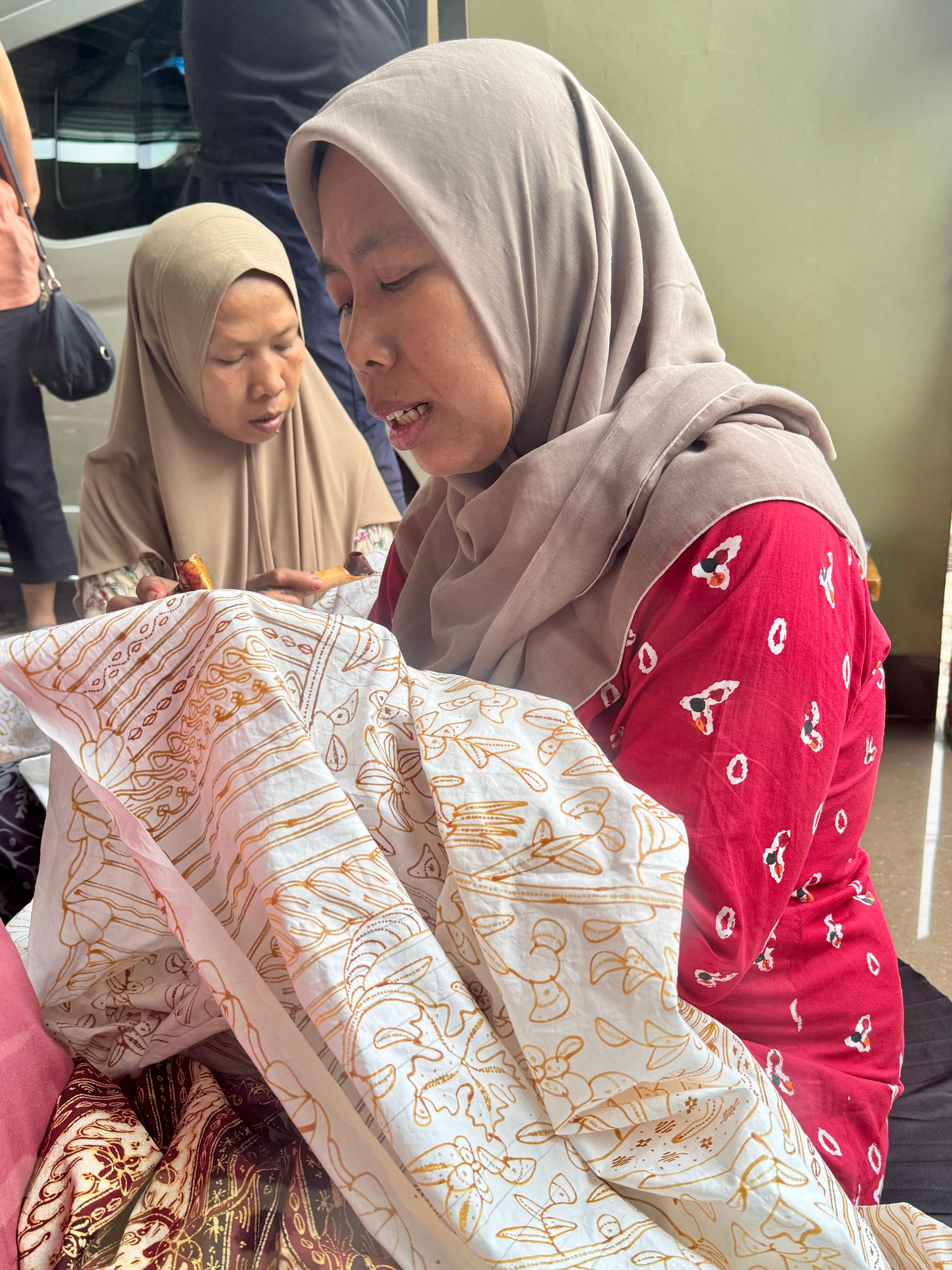
3. Mifthahutin, one of the Batik Rifaiyah practitioners, working with a canting while chanting Quran verses. Photo © Tony Sugiarta.
Well-being Through Batik
Batik is more than an art form; it is a living system of care shaped by breath, rhythm and relationship. Across different contexts – from the ecological spirituality of Tribawana in contemporary batik art making to the devotional melodies of longstanding Batik Rifaiyah tradition – batik demonstrates how well-being can be embedded within everyday cultural practices.
Batik also offers a culturally rooted model of well-being that is both personal and collective. In a time of increasing disconnection in a fast-paced world, these practices remind us that healing can be found in making – slowly, attentively, and together.
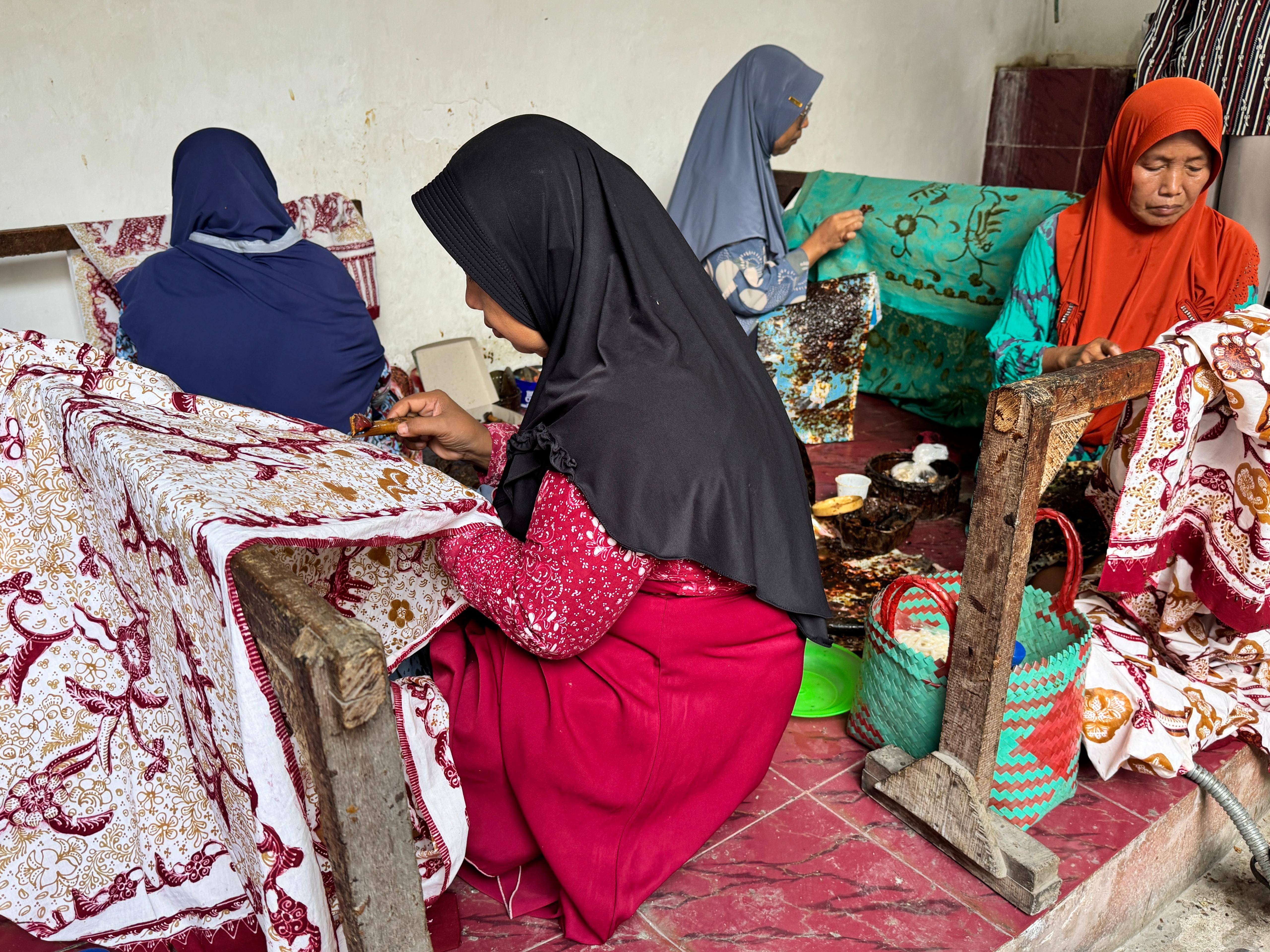
4. A common waxing station set-up in batik workshops where artisans sit in a circle sharing resources and stories. Photo © Tony Sugiarta.
Cover image: A common waxing station set-up in batik workshops where artisans sit in a circle sharing resources and stories. Photo © Tony Sugiarta.
About the Author
Tony Sugiarta is the founder and curator of aNERDgallery, a Singapore-based art platform dedicated to Indonesian traditional textiles. Established in 2017, aNERDgallery re-examines Nusantara textile heritage through a contemporary art lens via exhibitions, thematic trips and collaborative projects. His curatorial practice positions textiles not merely as a traditional craft, but as a critical medium for exploring culture, identity and sustainability. By bridging artisanal knowledge with contemporary artistic discourse, his work seeks to make textile heritage relevant and accessible to wider audiences, while fostering dialogue between tradition and innovation in Southeast Asia and beyond.