Building Cultural Bridges Through Lao Art Week

How can the public and private sector pool together ideas, resources and partners to support the development of a vibrant arts and cultural sector? The XYZ Art and Culture Center's Lao Art Week reflects how trust, structure and collaboration can bridge the gap between the two sectors.
Lao Art Week, initiated and managed by The XYZ Art and Culture Center, began in 2022 as a response to the limited visibility available for artists in Laos. When Lao Art Week was first created, my intention was to provide Lao artists with a visible platform. The issue in Laos has never been a question of talented arts and cultural professionals but it is the limited cultural infrastructure and platforms such as exhibition space or stages that allow these artistic expressions to become visible, understood, and supported. In order to do that, throughout our work with various stakeholders, we identified the need for these actors to be on the same dialogue to truly create changes.
Early Development and Institutional Learning
In the early years, my work with Lao Art Week focused primarily on connecting artists with one another and building a relationship between creators and audiences. At that stage, the co-founding team of Lao Art Week did not yet have a strong institutional voice, and attempting to engage major stakeholders too early would have been premature.
Lao Art Week 2023 and 2024 reflected this reality, the core participants were individual artists and the general public, while government representatives were involved mainly in key moments where their presence was necessary to understand the initiative’s direction. In general, the collaboration between government bodies and private cultural organisations still existed mostly at a ceremonial level rather than through shared responsibility and achievement.

1. The XYZ Artist Gathering Workshop in Savannakhet Province in 2023. Photo © The XYZ Art and Culture Center.
As a private organisation, navigating institutional protocols, approval processes, and unwritten administrative expectations required time and patience. These early years were a mutual learning period, where both sides slowly tested and adjusted to each other’s working cultures.
For us too, one of the earliest challenges was the difference in terminology and expectations. Internationally, “art” typically refers to all artistic forms, but within the Lao public sector it refers primarily to “performing arts”.This seemingly small distinction led to procedural delays and uncertainty when we first approached the Ministry of Culture and Tourism.
Building Shared Understanding and Trust
At the early stage of Lao Art Week platform recognition, we approached this collaboration as a way to understand how we could work together and to clarify our respective roles. It was important to identify early on what exact support we needed from the government apart from funding. Donors often ask how our partnership with the Ministry operates and whether government funding is involved.
In practice, the partnership is grounded in in-kind support such as venues, security coordination, and institutional endorsement. This was particularly important in 2025, when the Lao National Museum and the Lao National Puppet Theatre served as key venues for national level presentations.
Although the private side does most of the operational work, I see this as part of a transitional phase where government and private actors gradually build trust, showcasing how each stakeholder can contribute to cultural development. This is why Lao Art Week has gradually taken on a symbolic role to facilitate this collaboration. The platform brings public and private partners together by providing structure, visibility, and a shared purpose.
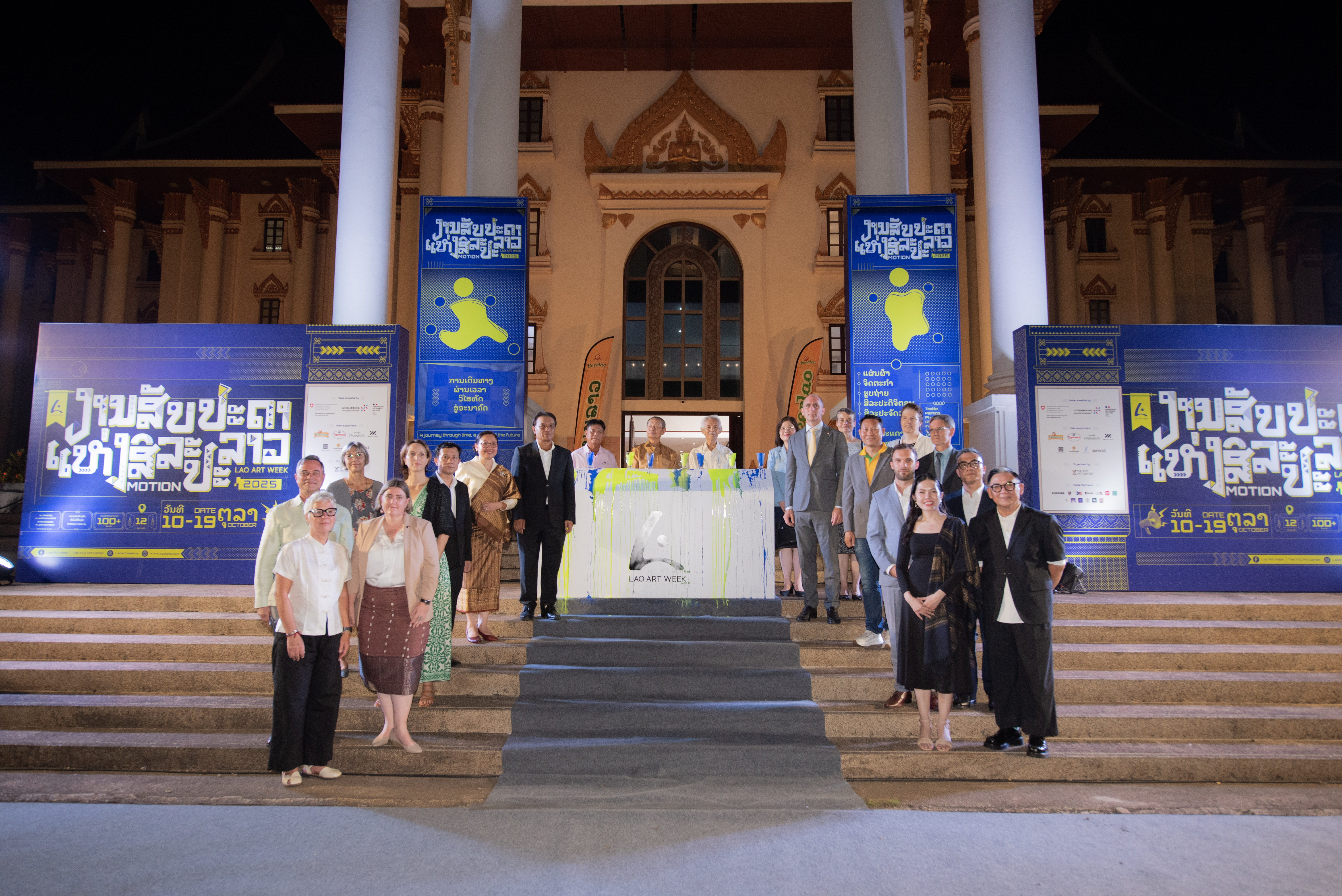
2. Opening ceremony of Lao Art Week 2025 with artists and partners across the cultural ecosystem. Photo © The XYZ Art and Culture Center.
Despite that, Lao Art Week also revealed the underlying challenges of connecting public and private actors. While the intention to collaborate exists on both sides, the ecosystem needed to support that collaboration is still developing. Differences in working culture, expectations, and institutional processes mean that public and private partners often operate in parallel rather than together.
Curatorial Strategy and Ecosystem Bridging
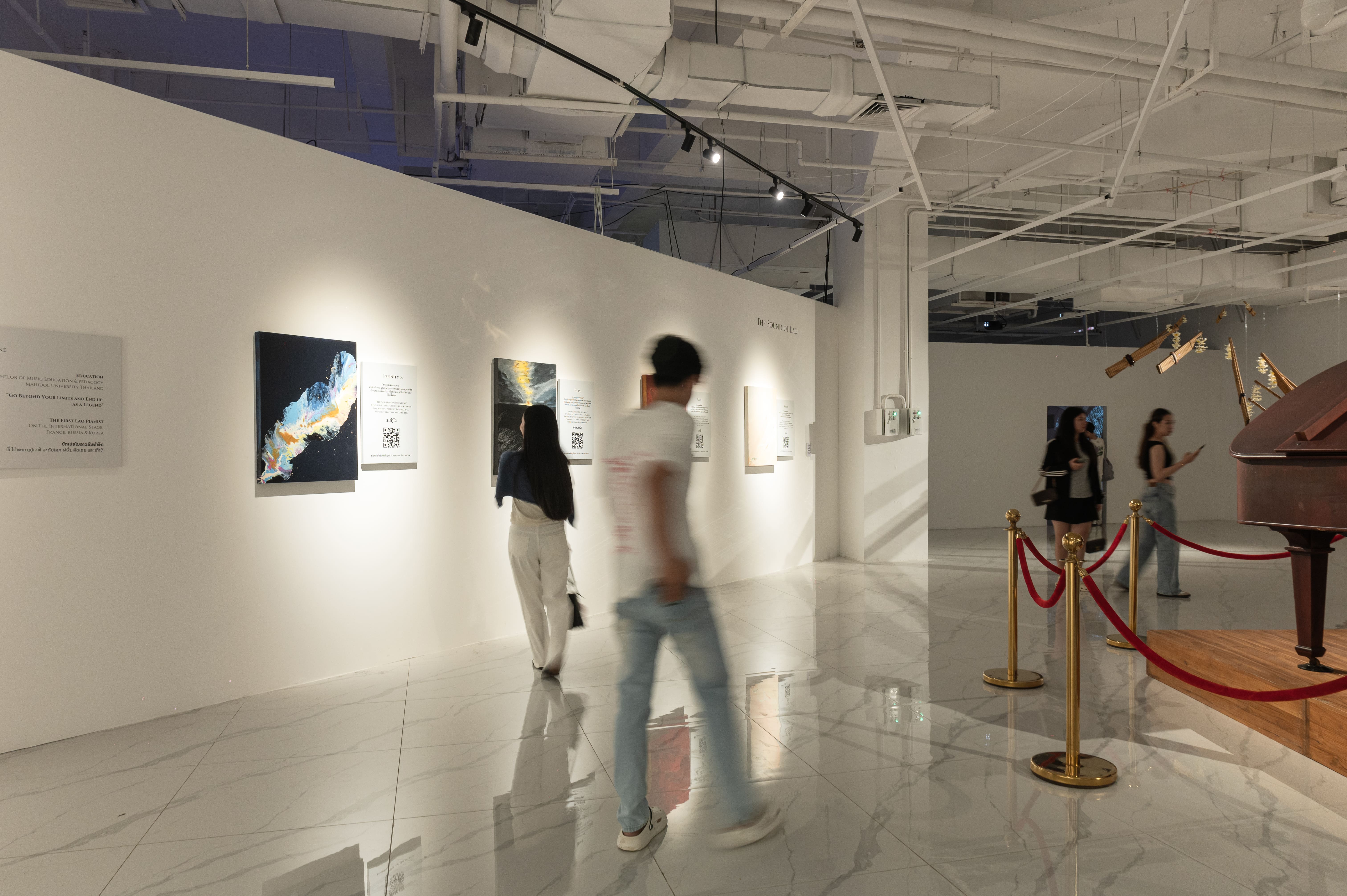
Lao Art Week is a meaningful mechanism for every stakeholder to meet on the same page and are given a chance to discuss on their roles in the ecosystem rather than working in parallel. In 2025, Lao Art Week artist placement followed a curatorial strategy grounded in protocol and developmental needs. Senior national artists exhibited at the Lao National Museum, a venue aligned with cultural representation and national symbolism. Younger artists exhibited at Parkson, where the setting supported experimentation and exploratory practice. Parkson is a contemporary commercial centre in Vientiane that offers open public spaces suited for creative experimentation, making it an accessible environment for younger artists.
 |
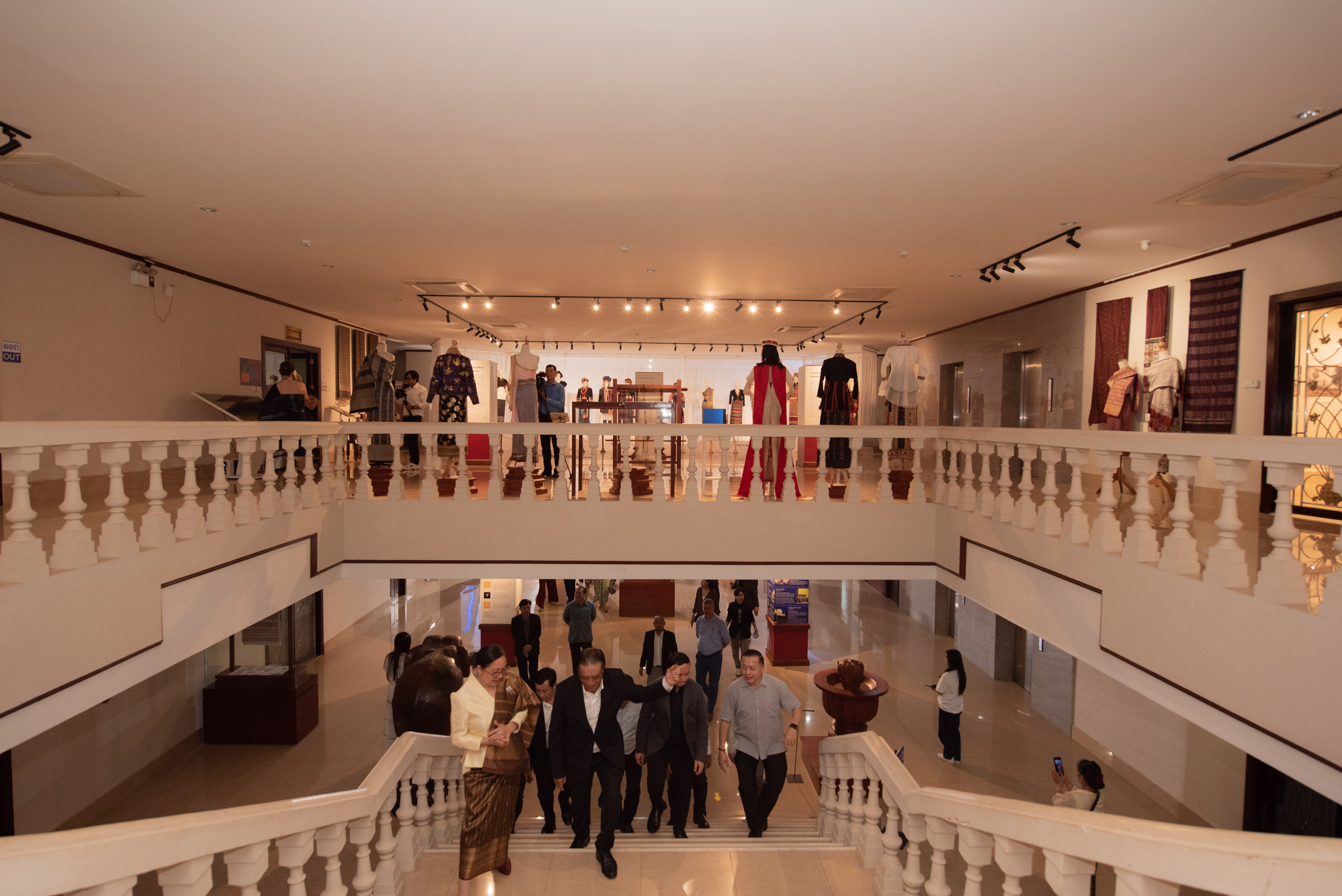 |
3. Younger Lao artists exhibit at Parkson (left) while senior artists exhitbit at the Lao National Museum (right). Photo © The XYZ Art and Culture Center.
This approach created an intergenerational bridge where senior artists received recognition and formal visibility, while younger artists gained a space for creative development. This is a clear example of how creative and cultural practitioners, donors, audiences and government can come together celebrating and having a dialogue.
Structural Challenges and Policy Implementation
Structurally, Laos continues to face significant challenges. While funding is often mentioned first, through Lao Art Week’s model, it confirmed that the ability to utilise in-kind support can be a strong start for meaningful cultural initiatives. Likewise, I would like to stress that cultural policy deserves equal emphasis in a developing country where navigating and changing policy is still possible.
Especially in Laos, the core issue is not the absence of policy, but the limited implementation of what already exists.This should encourage both policymakers and beneficiaries such as artists and cultural professionals to start implementing existing policies.
Regional Connection and Cultural Sustainability
Lao Art Week shows that building collaborations between the public and private sector does not require large budgets. It requires structure, consistency, and a neutral platform that both sides trust. Laos demonstrates that even in contexts with limited cultural infrastructure, a small civil society initiative can become a national connector by coordinating between ministries, creators, donors, and educational institutions.
The gradual shift from ceremonial involvement to shared responsibility highlights how trust is built through repeated engagement rather than funding and policy alone.
One of the notable achievements of Lao Art Week 2025 as a first step of bridging beyond our border is how we hosted in parallel with Mekong Cultural Hub’s Meeting Point 2025, where artists and cultural professionals come from various regions to meet in Vientiane. It highlighted a key lesson that cultural sustainability grows when governments provide recognition and access, while the private and civil sectors lead implementation and innovation.
Laos also shows that multisite programming, intergenerational inclusion, and school partnerships can activate audiences and strengthen the creative economy from the ground up. For me, Lao Art Week is here connecting Laos to wider cultural dialogues domestically and regionally. Above all, it is a living archive of our time, recording the presence and growth of Lao artists with honesty, complexity, and hope.
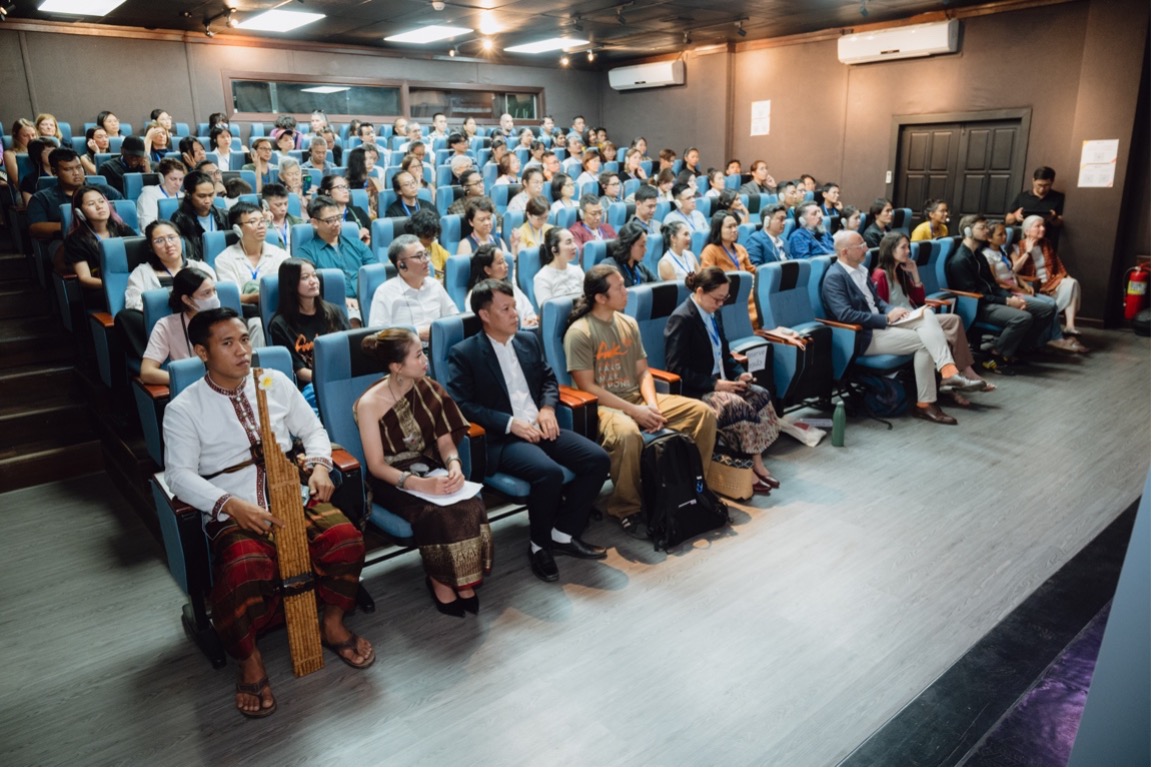
4. Meeting Point 2025 in Vientiane, Lao PDR. Photo © JPEG Image Production.
Cover image: Lao Art Week 2025. Photo © The XYZ Art and Culture Center.
Explore the arts and cultural sector of Lao PDR further with Rooted in Practice: A Mapping of Lao PDR's Creative Ecosystem. This report maps out existing cultural trends, identifies gaps and opportunities to do more for the arts sector in Lao PDR.
About the Author
Manithip Vongphachanh is an arts manager passionate about driving strategic efforts to promote artistic excellence and community involvement, curating exhibitions and educational initiatives that enrich our cultural fabric. Her mission is to foster an inclusive, creative environment and elevate awareness around ethical practices in both art and fashion.