
Dancing Barefoot in the Museum
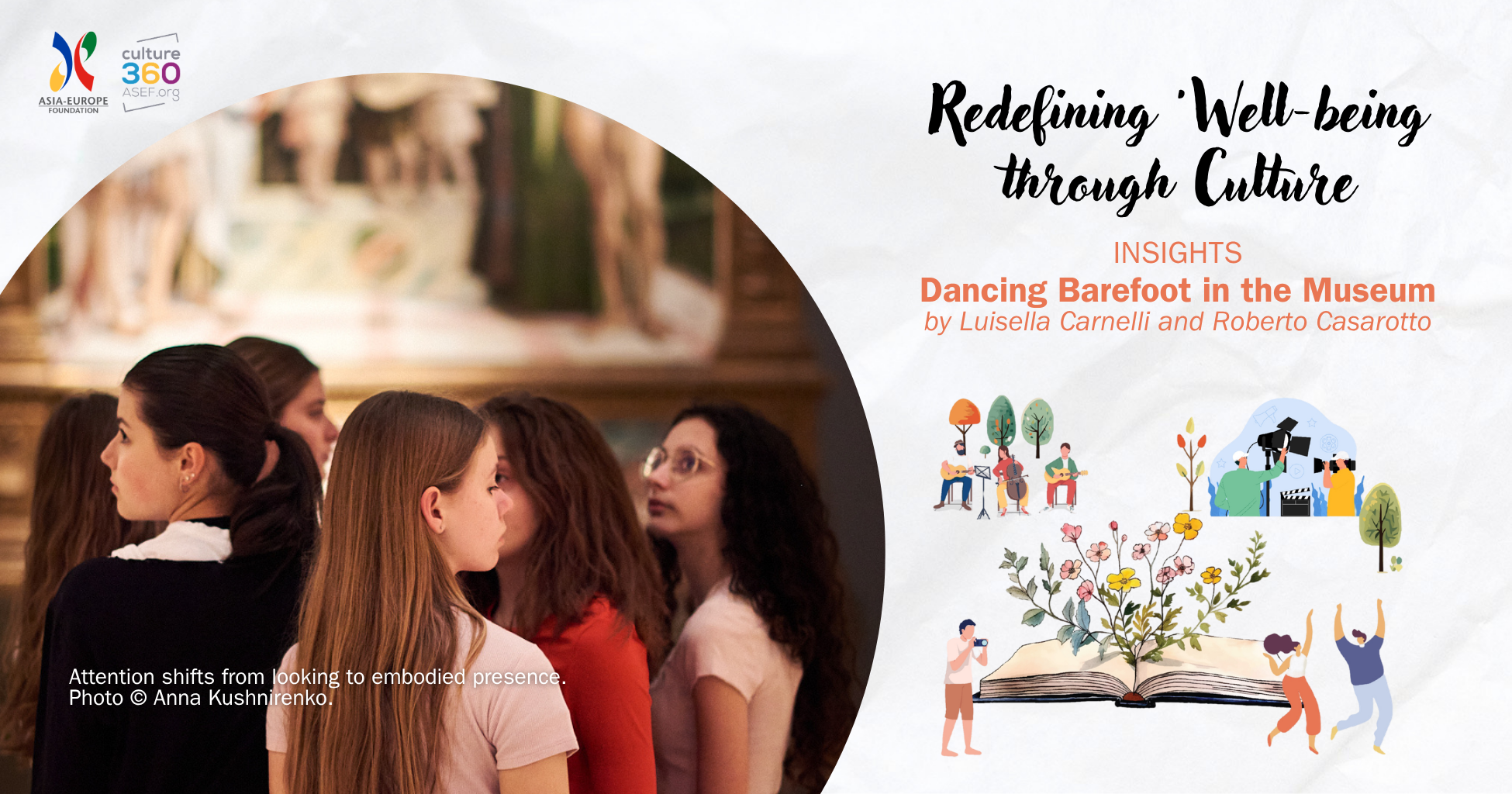
Participatory dance in museums reframes well-being as cultural agency. Future Moves, a choreographic practice grounded in instant composition and improvisation, invites young participants to explore artworks through movement, practicing creativity, generating trust, collective attention and participation through embodied cultural experience.
This article is commissioned as part of culture360.ASEF.org's Redefining 'Well-being' through Culture open call. Through a series of articles, video interviews and podcasts, we delve into the multidimensional contribution of culture towards good physical health, mental health, individual and societal well-being.
A group of adolescents enters a museum. They remove their shoes. And slowly they begin to dance. In that moment, the museum is no longer only a place to look at the past. It becomes a space where the future manifests itself through movement.
The Silent Crisis of Youth Well-being
Across many countries, young people are navigating an increasingly complex landscape of pressures. Anxiety, loneliness and fragmented attention are widely reported by educators, families and health professionals.
Public debate often frames these challenges in clinical terms: stress, burnout and depression. Yet many of these struggles emerge not only from individual vulnerabilities but from broader social conditions: accelerated and ever more pervasive digital environments, intense pressures to perform and succeed and fewer opportunities for shared, collective experience.
For this reason, cultural institutions are increasingly entering conversations about well-being, participation and social cohesion.
The Politics of ‘No’
Traditionally, museums are ocular-centric environments designed for quiet contemplation. Visitors move slowly through galleries, maintaining a respectful distance from artworks. For generations, museums have been shaped by a pedagogy of restraint: do not touch, do not run, do not speak too loudly. In this sense, they can easily become what many young people experience as spaces of “no”.
This logic is not only behavioural, it is also epistemic. Knowledge is often presented as something to be received, rather than interpreted, imagined or contested. Visitors are positioned as relatively passive observers, not as agents in the production of meaning.
Young people rarely flourish in spaces built around prohibition and passive reception. They tend to thrive in spaces of possibility, where they are invited not only to look, but also to interpret, imagine and take a stand.
What if culture and heritage could contribute to well-being not by transmitting knowledge, but by generating agency?
The Museum as a Space of Possibility
In the heart of Palazzo Chiericati, an Italian civic museum and UNESCO site in Vicenza, groups of teenagers are doing something unexpected: they are dancing barefoot, in dialogue with centuries-old masterpieces.
This is not a performance for an audience; it is a weekly activity, a reimagining of well-being through dance as an active form of cultural participation. Future Moves is an initiative led by experienced dance artists. They invite adolescents to move from being passive visitors to co-creators of cultural meanings. Through this inversion of roles, instead of asking teenagers to adapt to the museum, the project invites the museum to open itself to movement.
By choosing the artworks that inspire their movements, these young people practise trust and courage as embodied social skills, and enhance their awareness and appreciation of the artworks themselves.
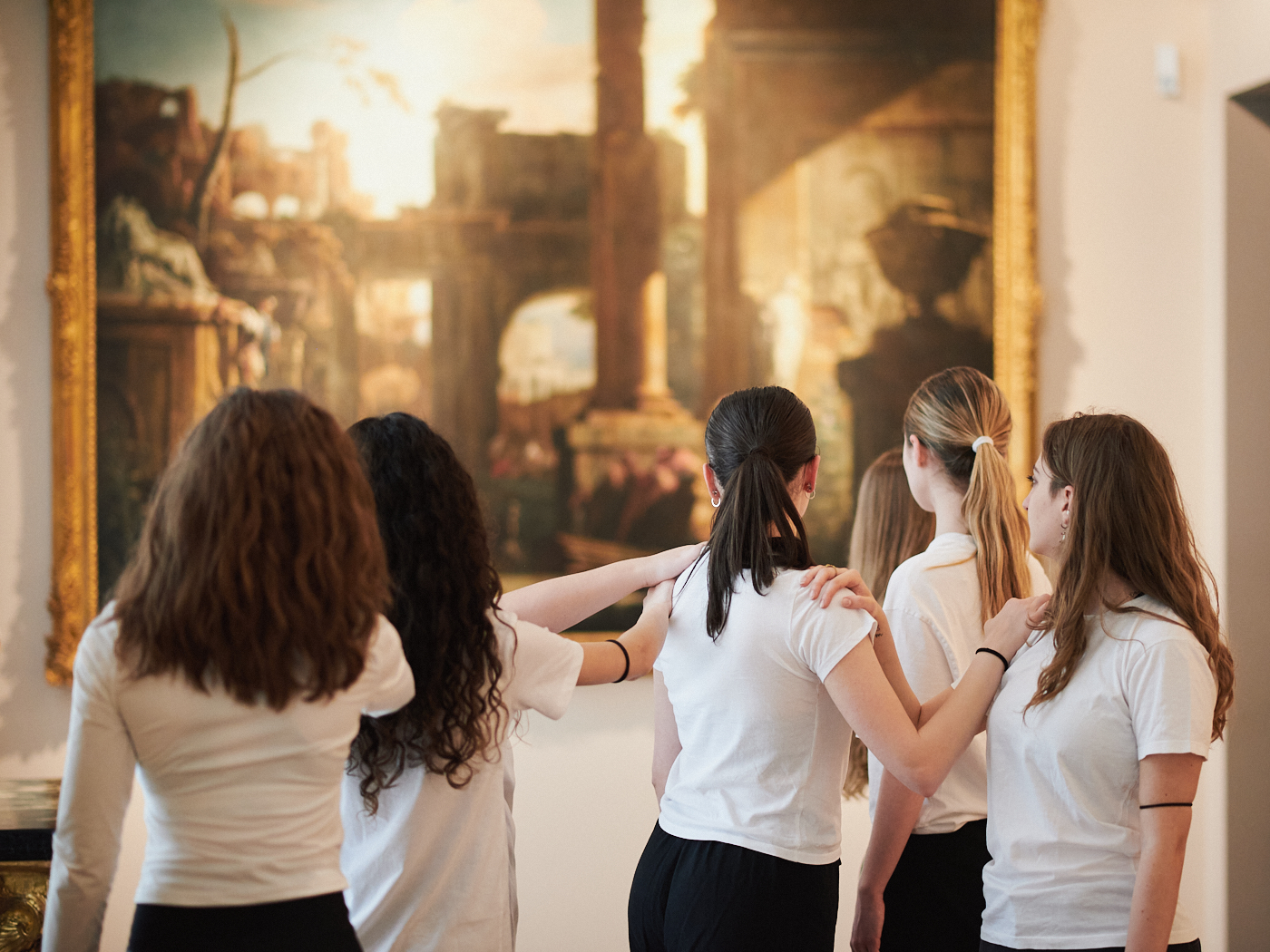
1. Moving together: practising collective attention. Photo © Anna Kushnirenko.
When Teenagers Dance in a Museum
The classes take place inside Palazzo Chiericati during opening hours. Visitors may unexpectedly encounter teenagers moving through the galleries.
One of the young people’s first gestures is disarmingly simple: participants remove their shoes.
Barefoot, they step onto the marble or wooden floors. Suddenly the museum is no longer a distant container of heritage but a physical environment to inhabit. The body senses the temperature of the stone or of the wood, the acoustics of the room and the presence of others nearby.
The practice developed in Future Moves draws on the method of instant composition and improvisation. Participants are not asked to learn choreography. Instead, movement emerges in real time through verbal invitations which use images and imaginaries to trigger physical actions, attention to the space, to the artworks and to the presence of others. Music supports and amplifies these experiences.
Rather than reproducing fixed sequences, participants respond to what unfolds around them: to the details of an artwork, the architecture of the gallery, the rhythm of other bodies and the atmosphere of the room. Sometimes visitors stop to watch. Museum attendants observe quietly from the corners of the rooms. A painting normally thought to require silent contemplation becomes part of a living choreography. Something subtle begins to shift in the atmosphere of the museum.
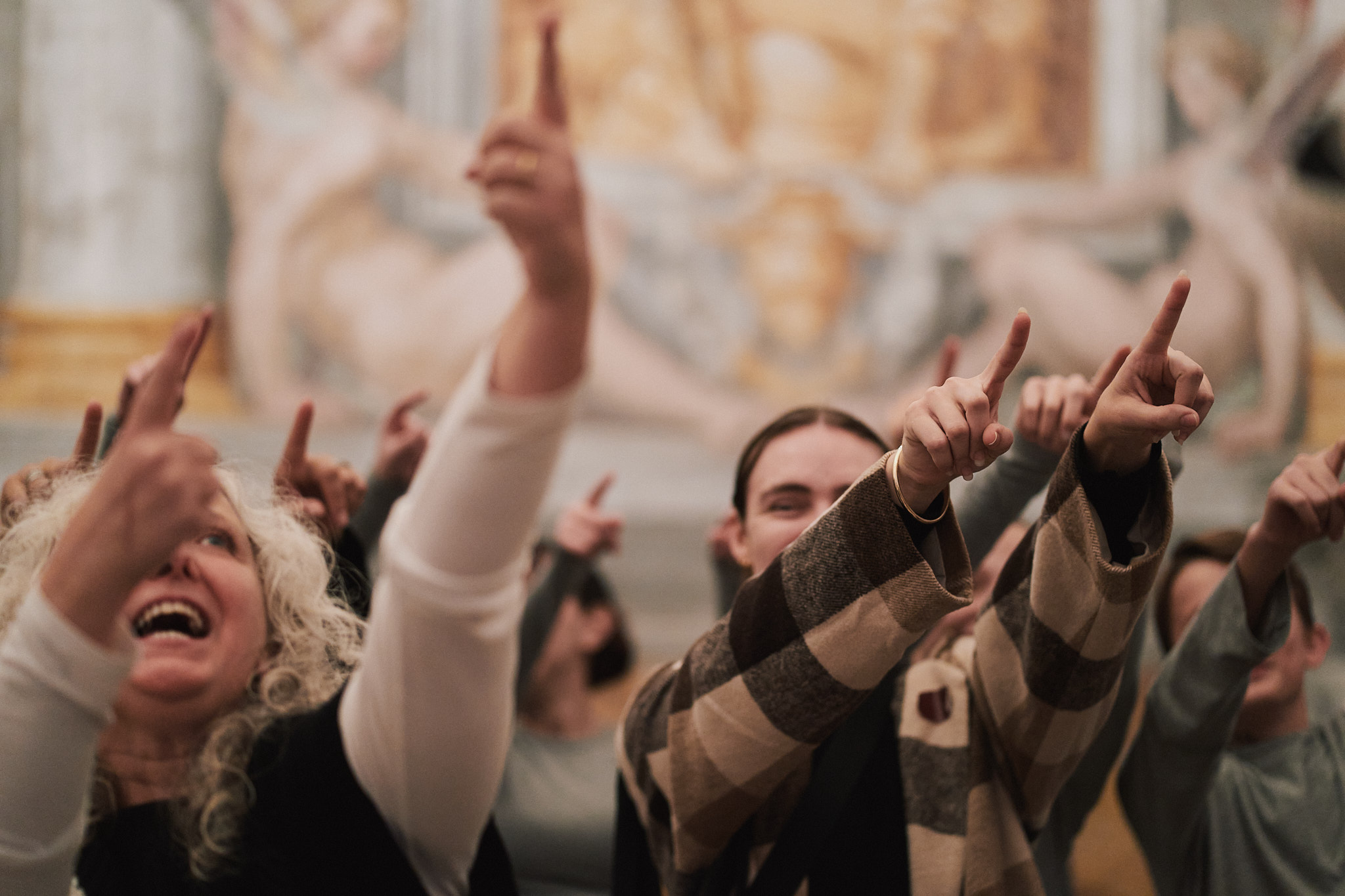
2. Improvisation in dialogue with artworks and architectural space. Photo © Anna Kushnirenko.
Attention in Motion
One of the most striking aspects of these sessions is the level of concentration that emerges. For about an hour, many teenagers stop checking their phones and become fully present in their bodies.
Dance here operates as a multisensory language; the imaginaries and human interactions keep participants very connected and motivated in their creative responses. Movement, perception and spatial awareness unfold simultaneously.
Participants observe one another, respond to subtle cues and learn to sense the rhythm of the group. In a social environment dominated by hyper-individualism and constant digital stimulation, this form of collective attention is rare. The body becomes both a tool for expression and a way to learn about individual and collective presence.
Training Trust
Perhaps one of the most important elements emerging from Future Moves is the reinforcement of trust. Dancing in a museum requires exposure: participants move in front of strangers, visitors and one another, with no stage separating performers from observers. At first, this visibility can feel uncomfortable, but over time the group learns to trust both the space and each other.
Trust also develops between artists and museum staff, as bodies move in spaces originally conceived for the display of artworks.
Trust here is not an abstract value, it is a practice, built through repeated encounters: moving together, negotiating proximity and supporting one another while taking small risks.
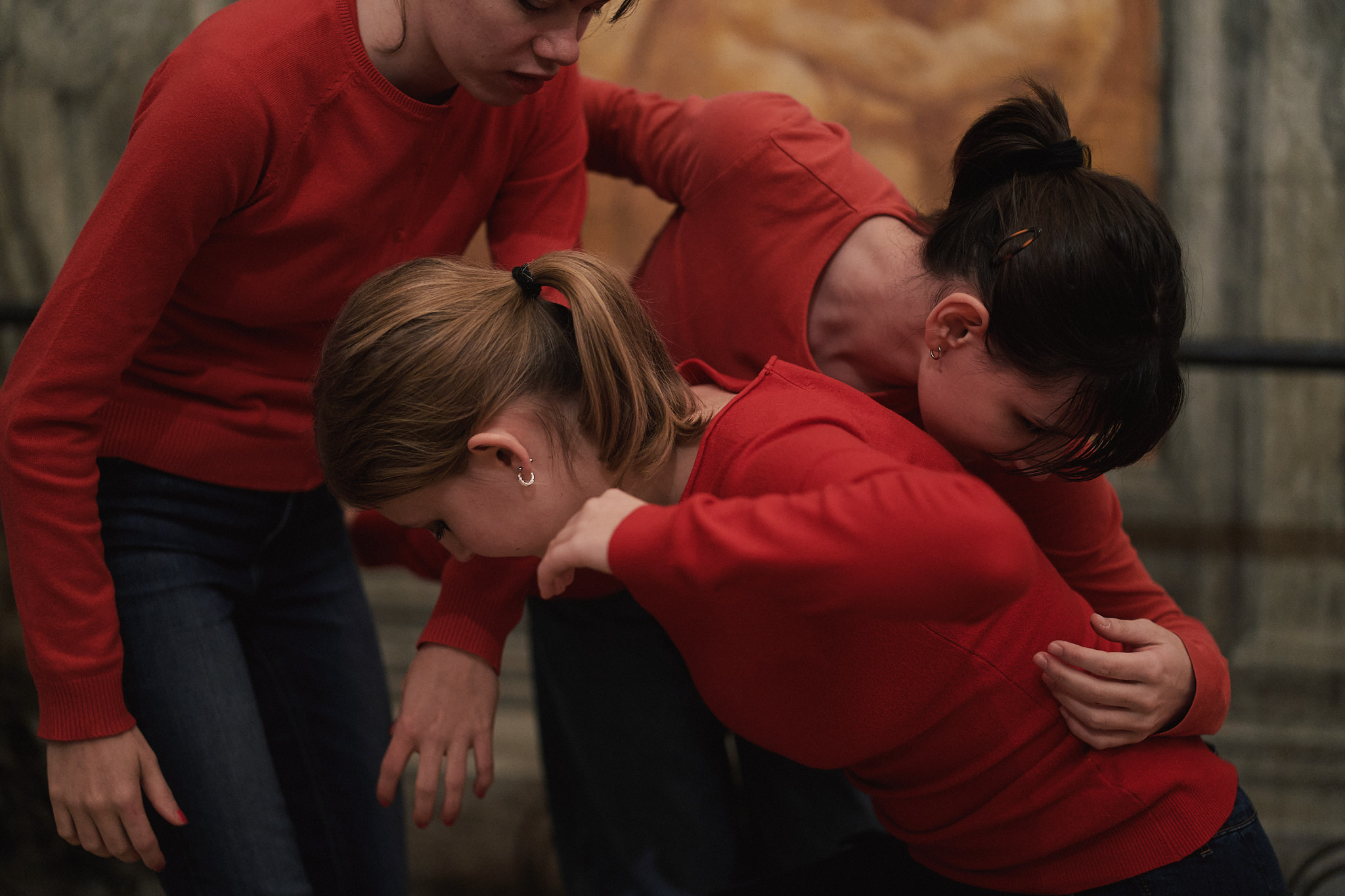
3. Trust takes shape through proximity, coordination and shared risk. Photo © Anna Kushnirenko.
Cultural Participation as Embodied Civic Learning
Initiatives like Future Moves suggest innovative ways of thinking about the relationship between, on the one hand, the arts and heritage, and, on the other, well-being. In many policy discussions, cultural participation is framed as a complementary tool for health systems, something that helps reduce stress or improve the mood of participants. But here well-being emerges differently. It takes shape through creativity, agency, participation and shared presence.
Seen from this perspective, Future Moves can be understood as a form of embodied civic learning. At a time of rising youth anxiety, the initiative suggests that museums together with dance can become laboratories for social resilience and democratic agency. Through dance, young participants practise attention, solidarity, cooperation and responsibility within a public cultural space.
The museum transcends its traditional role as a place of heritage, and becomes an environment where trust, imagination and collective presence can be rehearsed. The museum becomes a space where a sense of ownership of the cultural heritage and of responsibility for its future can be practiced and shared.
At the end of each class, the galleries slowly return to silence. Visitors continue their tour. The echoes of choreographies and dances reverberate in the rooms.
Cover image: Attention shifts from looking to embodied presence. Photo © Anna Kushnirenko.
About the Authors
Luisella Carnelli is a senior researcher and consultant at Fondazione Fitzcarraldo (Italy). Her work explores socially engaged arts, cultural participation and the role of artistic practice as spaces of civic learning, social trust and collective imagination. She works internationally on research and projects connecting culture, communities and social transformation.
Roberto Casarotto is the co-director of the European Dance Network, Aerowaves. He co-founded, with e20danza, Future Moves – Museums and Dance for Young People living with psychological vulnerability, and is a member of CCW Welfare Cultural Center. For the Municipality of Bassano del Grappa and its citizens, he conceived and developed Dance Well – Movement for Parkinson's and coordinated its national and international growth until 2025.