
Interview | FOTO Bali Festival
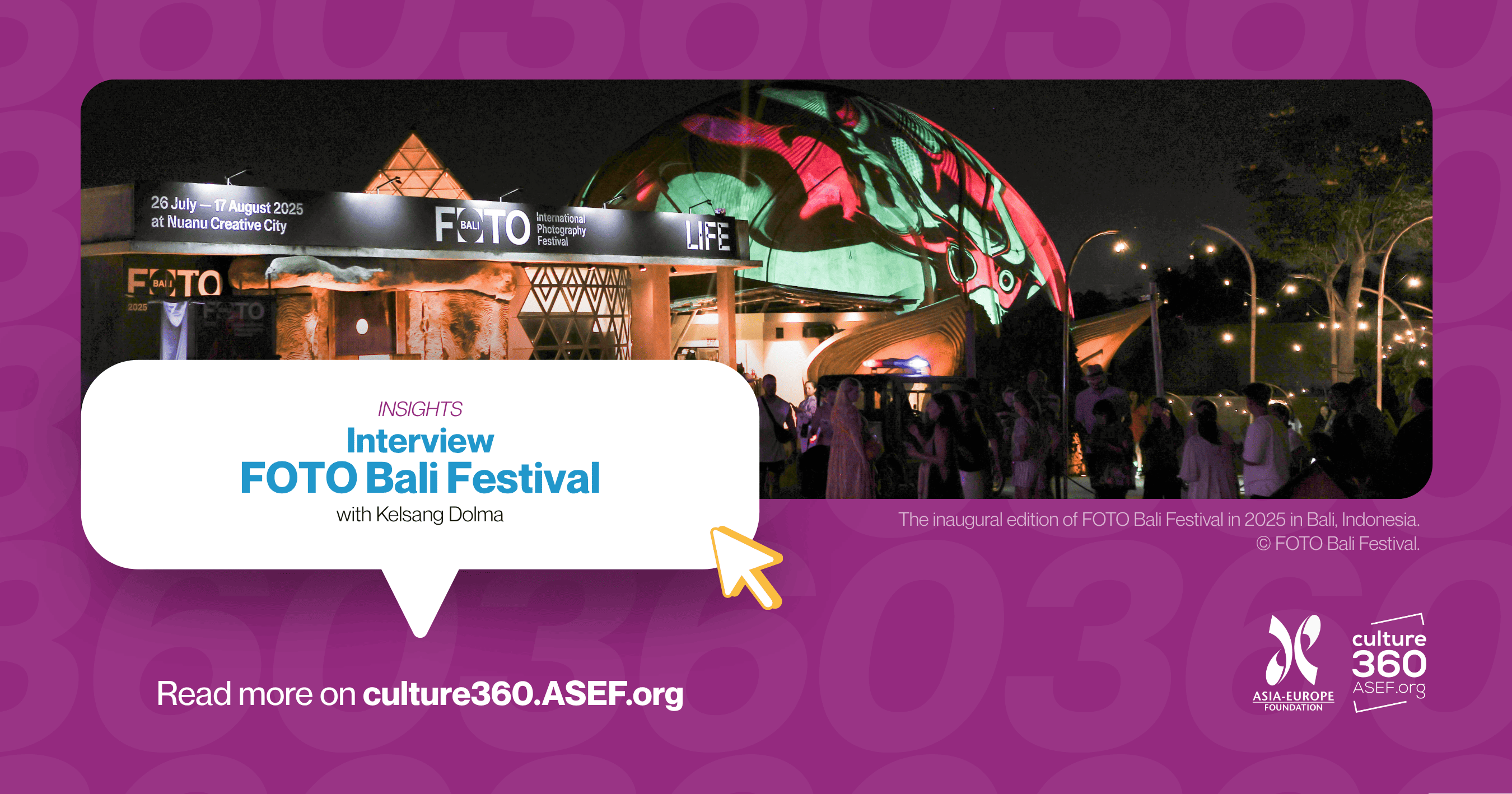
In an interview between ASEF culture360 and FOTO Bali Festival 2026 founder, Kelsang Dolma, find out the vision behind the festival, its role and relevance in nurturing the photography ecosystem on both the local and international levels.
- What motivated you to establish FOTO Bali Festival in 2025, and what gap were you hoping to fill in the photography field?
Kelsang Dolma: The motivation came from both a personal interest in photography and a wider recognition that the medium still does not have enough dedicated space with the cultural landscape here. Through Nuanu, we could build something with intention, not just another event, but a platform that could take photography seriously as an artistic, social and public forum.
What we felt was missing was both infrastructural and conceptual, that could hold different photographic practices together: from established and emerging voices, to local and international practitioners, spanning documentary, conceptual work, personal narratives and wider social questions. Photography is everywhere in daily life, but that does not always translate into meaningful support for photographers or critical engagement with the medium itself. FOTO Bali Festival was conceived to help fill that gap.
We wanted to create a platform that could support exhibitions, conversation, exchange, and visibility, while also being accessible to broader audiences. For us, the festival is not only about showcasing images.
It is about creating a context in which photography can be experienced as a way of seeing, thinking, remembering, and questioning the world around us.
2. How did you conceptualise the inaugural edition of the festival in 2025? Were there any unexpected themes, tensions or discussions that emerged during the festival?
Kelsang Dolma: The first edition was meant to be exploratory, to listen closely and understand what kind of space wants to take shape. We worked with curators like Ng Swan Ti and Gatari Kusuma, whose curatorial and research-driven approaches helped us build the festival with openness. We wanted the first edition to feel like an invitation for both artists and audiences.
The 2025 theme, ‘LIFE’, was very deliberate. It came from a desire to return to something fundamental: the beauty, fragility and complexity of being alive, which is especially important when so much feels uncertain or fractured.
What emerged more strongly than we expected were questions around perspective and responsibility, who gets to make images, whose realities are being framed, and how places like Bali are constantly seen, consumed and reimagined through photographs. That created a productive tension between photography as evidence and photography as construction, between what an image shows and what it leaves out.
In addition, the generosity of the photographers, curators, partners and supporters around the first edition was one of the clearest signs that the festival was not just launching.
It was the beginning of a community around photography that people genuinely wanted to invest in.
1. 'LIFE', the theme of FOTO Bali Festival 2025, is an invitation to return to the beauty, fragility and complexity of being alive. Photo © FOTO Bali Festival.
3. What is the photography culture like in Bali and the wider region? Why was Nuanu Creative City the right setting to develop the festival in both the 2025 and 2026 edition?
Kelsang Dolma: Photography in Bali is vibrant, but much of it still lives in a relatively informal way. Indonesia and the wider Southeast Asian region already have important photography platforms, from the Jakarta International Photo Festival (JIPFest) to the Singapore International Photography Festival, so our intention was never to suggest a vacuum. It was to contribute something specific from Bali, which, because of its strategic geographic position and unparalleled international appeal, can become a major meeting point for photographers, curators, and creative communities from across the region and beyond.
Nuanu was the right setting because it offers more than a venue. As a 44-hectare creative city with an ecosystem of creative communities and shared infrastructure, it gives the festival room to grow as something larger than an exhibition format. It allows us to think of FOTO Bali as a living annual platform shaped by exchange, public engagement, and cross-disciplinary encounters.
4. How does the theme of the festival's second edition, 'AFTERIMAGE', shape this year's programming and curatorial direction? Tell us some of the exhibitions and programmes to look out for at the upcoming festival.
Kelsang Dolma: ‘AFTERIMAGE’ shaped this year’s edition by shifting the focus away from the image as a single captured moment to what continues after: residue, consequence, endurance and return. We are interested in photography as something that unfolds over time, where meaning is not fixed at the moment of making, but changes through memory, circulation, reinterpretation and lived experience.
That idea is already coming through clearly in the festival’s call for submissions. While we are still in the review process, the scale of response alone has been striking, with nearly 700 submissions from 80 countries this year, up from 237 submissions from 29 countries last year. Many works highlight recurring concerns such as unresolved histories, altered landscapes, personal and collective memory, and the conditions people continue to live through after rupture or change. Many of them also ask what remains visible, what falls away, and whose lives continue to be framed.
This year’s programme includes exhibitions, talks, workshops, screenings, and portfolio reviews, across documentary, conceptual, archival, and multimedia practices. What ties them together is a sustained engagement with aftermath rather than climax.
‘AFTERIMAGE’ ultimaltely positions photography as an ongoing conversation with time, rather than a fixed image of what has already happened.
.jpg)
2. A glimpse of FOTO Bali Festival 2025. Photo © FOTO Bali Festival.
5. With the proliferation of social media and AI, how do you think photography has evolved? What unique challenges and opportunities do photographers in the region now face in promoting photography as an artform?
Kelsang Dolma: Photography today exists in a paradox. Images are more abundant, immediate, and widely circulated than before. Social media has made photography part of everyday language, but it has also compressed attention and blurred distinctions between image, content, and art. The rise of AI then challenges ideas of authorship, authenticity, and what makes an image photographic. Rather than weakening photography as an artform, it highlights the importance of intention, context, and rigour, pushing photographers to be more deliberate about what they are doing and why in their practice.
For photographers in Indonesia and the wider region, the main challenges remain structural. Photography still lacks the institutional or commercial support that other artforms often have. It is often underrepresented in museums and galleries and not consistently collected or supported in ways that sustain long-term practices. While these are not the only measures of success, the bigger question is whether enough serious contexts exist where the work can be presented, discussed, and developed.
The opportunity lies in building such contexts differently. In Bali, and particularly within Nuanu, there is real potential for collaboration, co-creation, and new forms of exchange that do not rely only on older models of validation. This, combined with the region’s layered histories, fast-changing societies, powerful visual cultures, and Bali’s international pull, gives photographers a chance to connect local perspectives to wider audiences. For me, that is where the opportunity sits – in fostering stronger ecosystems around the work.
.jpg)
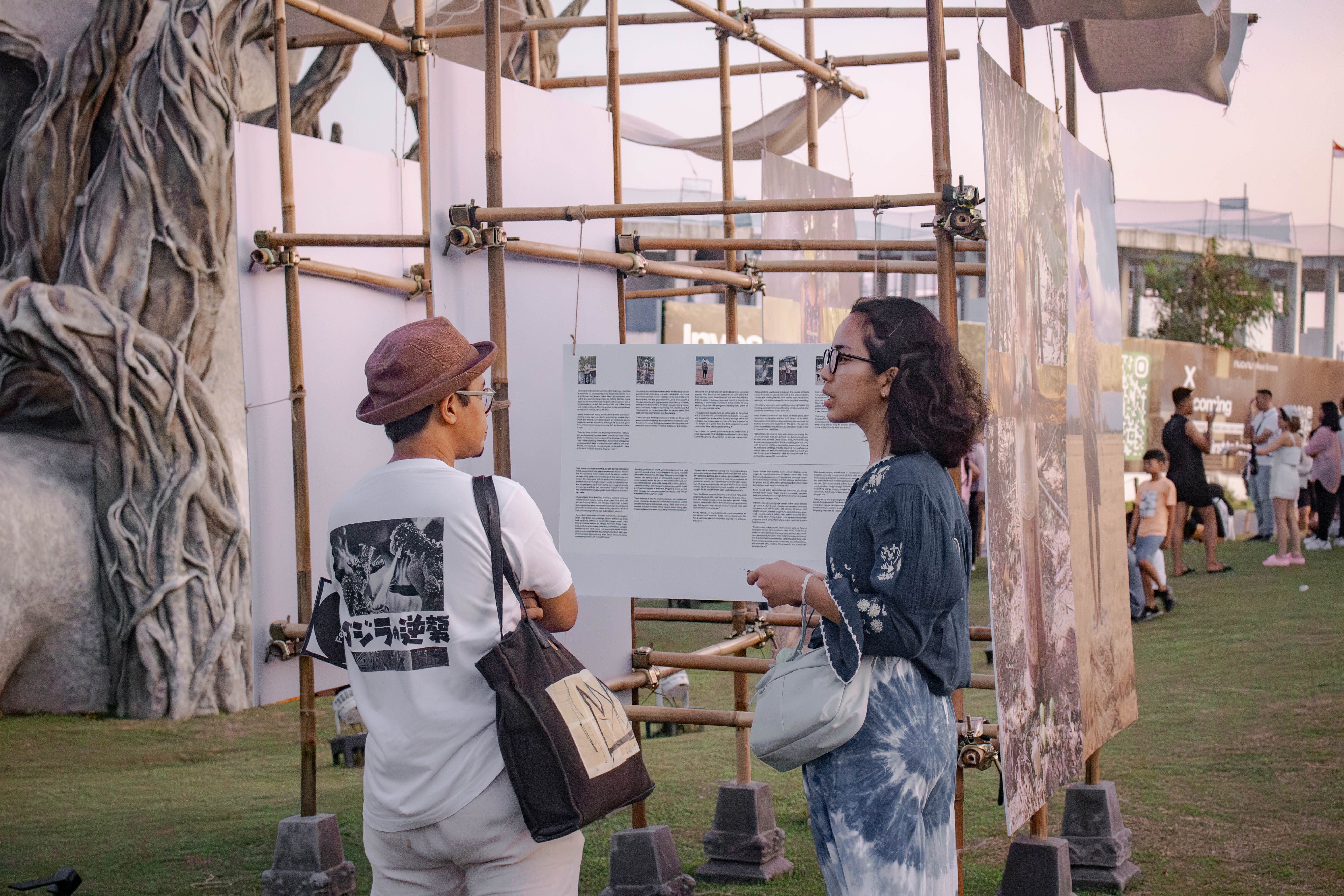
3. Collaboration, co-creation and new forms of exchanges is where the opportunity lies in fostering a stronger photography ecosystem. Photo © FOTO Bali Festival.
6. Looking ahead, beyond showcasing photography projects and exhibitions, how do you see the role of such artistic initiatives in nurturing the photography ecosystem on both local and international levels?
Kelsang Dolma: FOTO Bali Festival has to function as a point of connection. A festival can bring photographers, curators, editors, institutions, and audiences into the same space, but the real value lies in what continues after that meeting. New collaborations begin there. So do mentorship, publishing opportunities, institutional relationships, and a stronger public around the medium.
At a local level, that means giving photographers and audiences more ways to engage seriously with photography through exhibitions, conversation, and exchange. At an international level, it means placing Bali and the wider region as an active contributor in the larger conversation.
Over time, that kind of continuity matters. Ecosystems are built through repeated contact, shared belief, and sustained support. If FOTO Bali Festival can help create those conditions year after year, it will have real value beyond the duration of the event.
Cover image: The inaugural edition of FOTO Bali Festival in 2025 in Bali, Indonesia. © FOTO Bali Festival.
About the Interviewee
Kelsang Dolma is the Director of Public Relations & Special Art Projects Nuanu, and the Founder of FOTO Bali Festival. Born and raised in India, she leads key cultural initiatives including Art & Bali, the island’s first international contemporary art fair; FOTO Bali, a global photography festival; and Labyrinth Art Gallery, a contemporary art space focused on artistic expression and the creative economy. Across these and other projects, she shapes Nuanu’s identity as a vibrant hub for creativity, collaboration, and cross-cultural dialogue.