
Media Partnership | Interview with Dharamshala International Film Festival 2025
As part of culture360's Media Partnership with the Dharamshala International Film Festival (DIFF) we speak with the Festival's co-founders and directors, Ritu Sarin and Tenzing Sonam, who share more about the humble origins of DIFF and the extraordinary growth it has seen in both its programming and vast community of film makers and enthusiasts.
1. Since its founding in 2012, the Dharamshala International Film Festival (DIFF) has become one of the leading film festivals in India, known for its bold and eclectic programming, and focus on filmmakers. What role does DIFF play in India’s film sector and how has it distinguished itself from other film festivals in the region?
Ritu Sarin and Tenzing Sonam: DIFF assumed this role purely by chance as it started out as a community event with the intention of giving the local community an opportunity to be exposed to non-mainstream, independent cinema. Because we were filmmakers ourselves and understood how film festivals worked, we focused on the quality of programming and on getting as many filmmakers as we could to present their films. At the same time, we also realised the importance of creating an intimate and relaxed atmosphere that was conducive to conversations and discussions. We did not know it at that time, but there was a lacuna in the Indian film festival landscape for such an event, and it took on a life of its own.
DIFF’s main role in the Indian film sector is its championing of independent cinema.
Over the past 13 years, we have showcased the works of a new generation of filmmakers, many of whom have gone on to make names for themselves in the larger film world. Many productive encounters have taken place at DIFF between filmmakers and film professionals that have led to successful collaborations. Our focus on shorts and first-time filmmakers has made DIFF the place to be to take the pulse of contemporary Indian cinema.
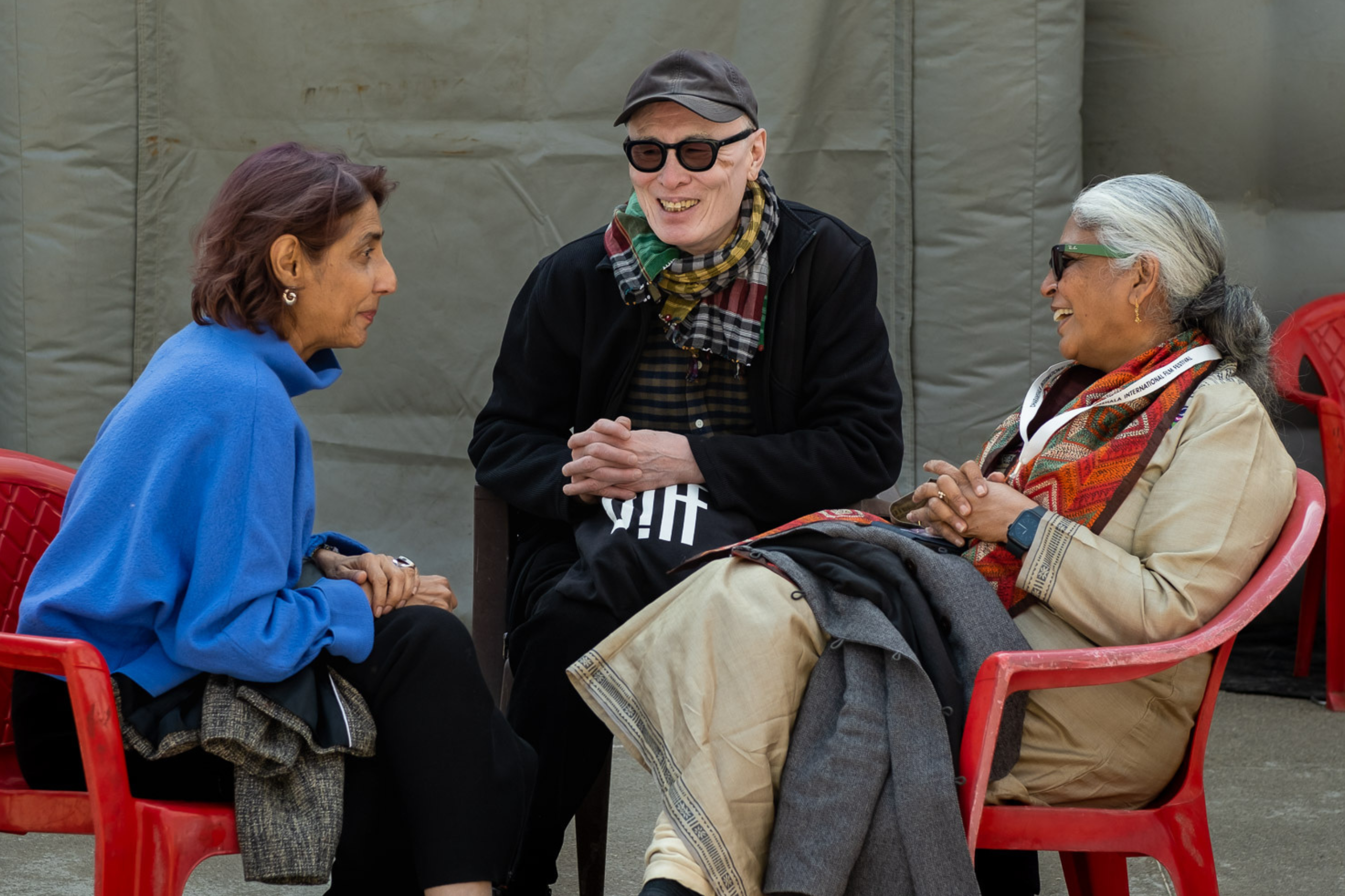
1. From left to right: Ritu Sarin, Tenzing Sonam (Filmmakers and Co-founders of DIFF) and Bina Paul (Award-winnning Film Editor) © Dharamshala International Film Festival
2. What do you think has changed since the early editions of the festival?
Ritu Sarin and Tenzing Sonam: The main change has been the evolution from a small-town cultural event to a national one that now draws audiences and filmmakers from across the country and beyond. Our partnership with PictureTime, which started in 2018, allowed us to take the leap from showing films on DVDs, Blu-rays and movie files, to screening on the professional Digital Cinema Package (DCP) format. Also, in the early years, we did all the curation ourselves, but as the festival grew and we started to get inundated by submissions, we decided to step back and form a programming team to take over the responsibility of curation.
The arrival of Bina Paul, the former Artistic Director of the International Film Festival of Kerala, and one of India’s most experienced film programmers, as our Director of Programming in 2023, was another landmark.
Although DIFF has certainly grown from its small beginnings, at heart it still remains an intimate event with a homemade feel to it!
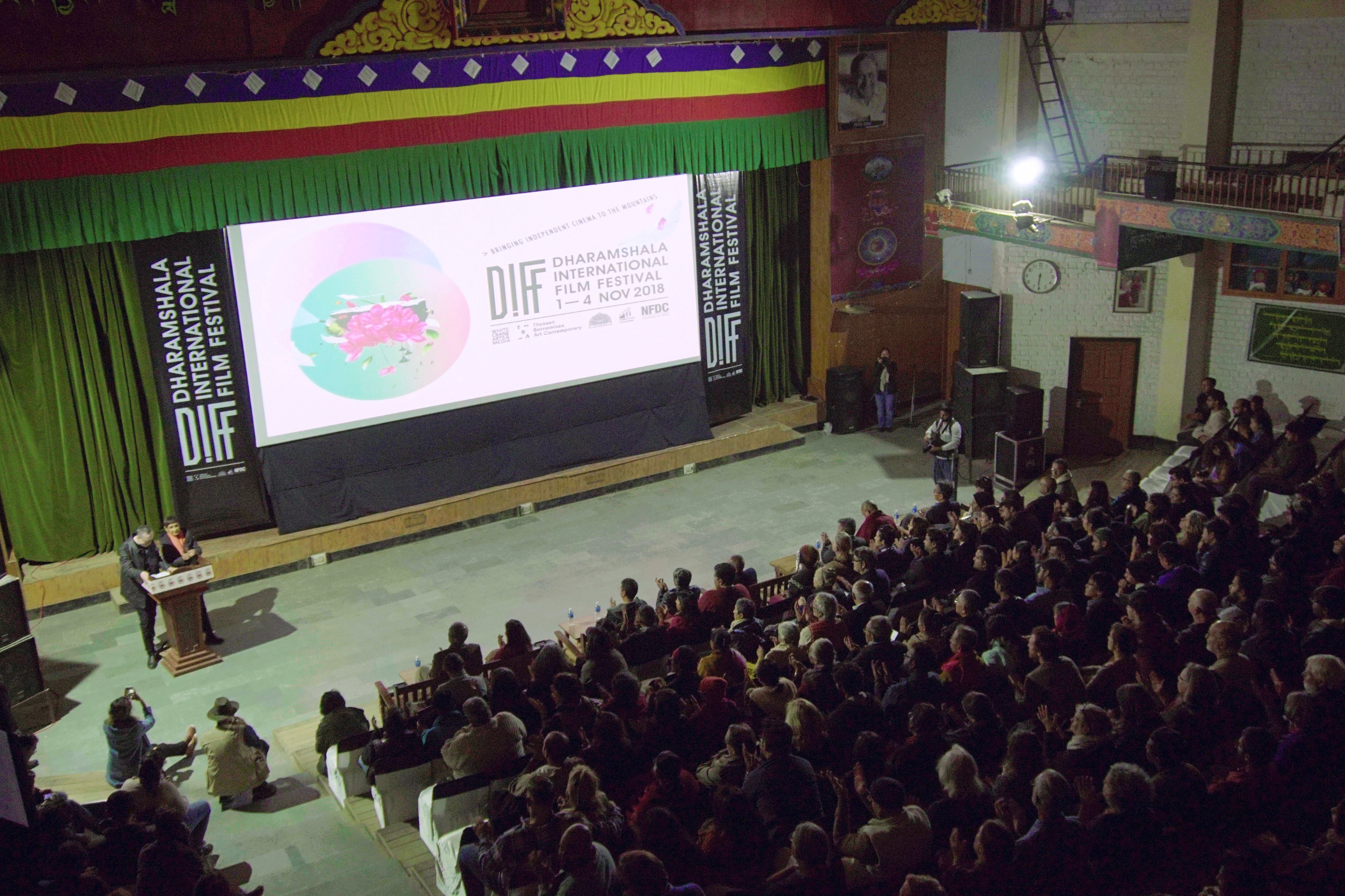
2. DIFF Opening in 2019 © Dharamshala International Film Festival
3. In addition to DIFF, since 2024 you also have DIFF on the Road, which extends your reach and programming – please share more about this initiative, how do you decide where to go and what films to bring with you?
Ritu Sarin and Tenzing Sonam: DIFF on the Road is our broader initiative to showcase films from the DIFF archives beyond the physical confines of the Dharamshala region. Over the years, we have collaborated with film clubs, cultural organisations and art festivals across India and internationally, including the Kochi Biennale and Colomboscope in Sri Lanka. While we actively reach out to like-minded people and organisations, we also receive a surprisingly large number of requests to host a DIFF on the Road Programme. The selection of films for each programme depends on specific inputs from our partners, and the nature of the occasion or event.
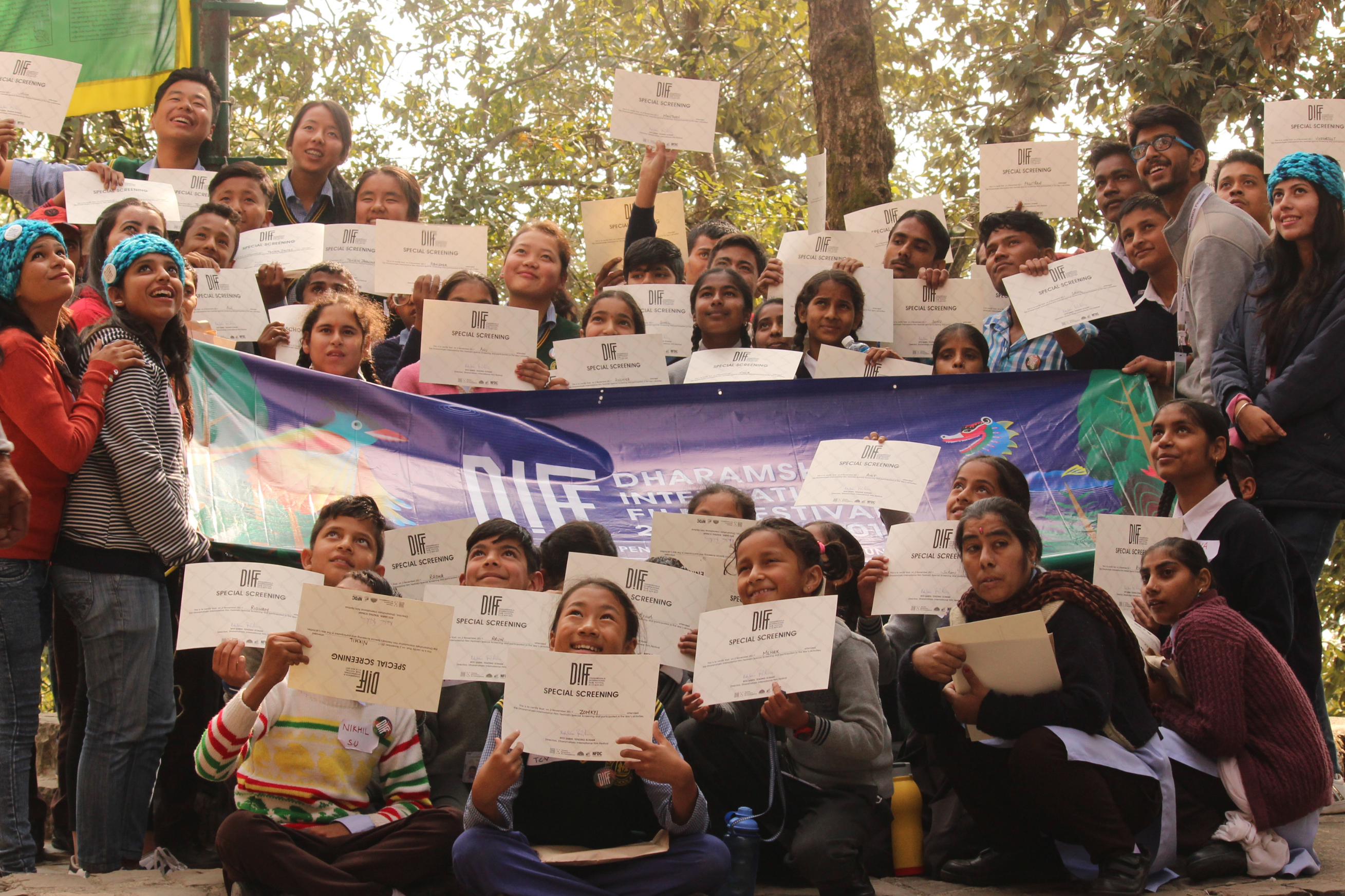
3. Students at special film screening © Dharamshala International Film Festival
4. Beyond the film screenings at the main festival, DIFF is also noted for prioritising the presence of filmmakers at the festival, creating opportunities for communities to come together and exchange knowledge and perspectives. Could you elaborate on the role of what community means to DIFF? How do the various communities you interact with, for example, the general audiences in the Himalayas, film students, and filmmaker alumni of the festival, influence the programme crafted for each edition?
Ritu Sarin and Tenzing Sonam: As we mentioned earlier, bringing filmmakers to present their films in person has always been a priority, and despite working with a limited and often inconsistent budget, we have tried to fulfil this aim every year. This is important, not only because it enhances the film viewing experience, but it allows for all kinds of meaningful interactions and partnerships to develop, especially in the context of an intimate event like ours. Beyond the actual event, DIFF also runs year-round initiatives like its Community Outreach Programme, which focuses on partnering with local NGOs and educational institutions to show socially relevant films to initiate discussions and promote film appreciation.
As a film festival based in the mountains, we feel a special affinity to the Himalayan region, and for a few years, we ran the DIFF Himalayan Filmmakers Fellowship, where we provided professional mentorship to budding filmmakers from the Himalayas. Despite the huge benefits of this initiative – several DIFF Film Fellows went on to make films that showed on the international film festival circuit – it was discontinued due to lack of funds, but we are happy to announce that we will be restarting it from DIFF 2026.
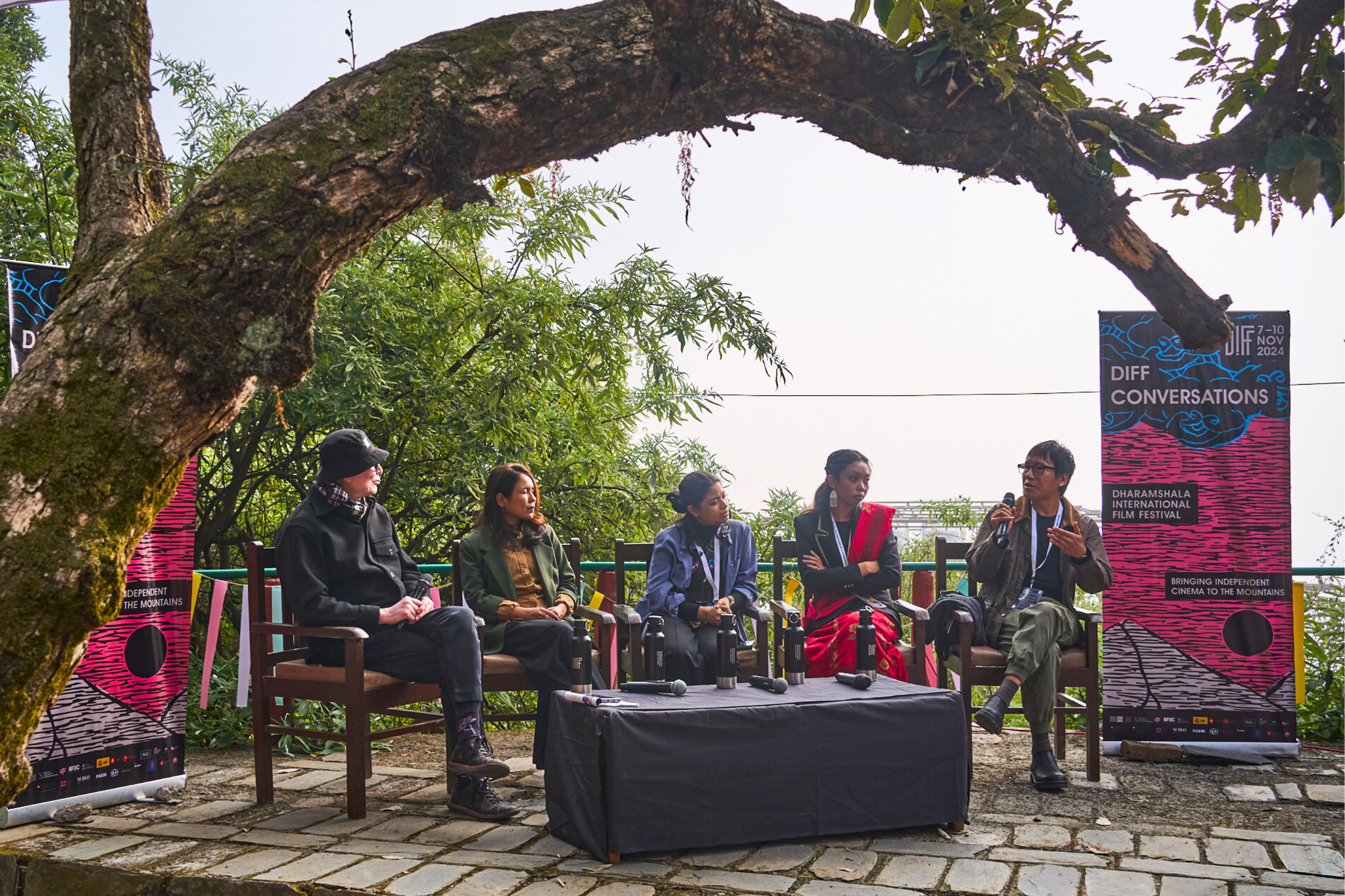
4. Panel Discussion at DIFF 2024 © Dharamshala International Film Festival
5. This year’s festival features a mix of films from India, Spain, Australia, Ireland and more. What were the thoughts of the team behind putting together such a diverse range of films for the festival? Are there any films that you/the team are particularly looking forward to?
Ritu Sarin and Tenzing Sonam: The selection criterion of DIFF has always been to curate films that represent the best of contemporary independent cinema from across India and the world – works that embody a distinctive auteur vision and push the boundaries of the cinematic form. And every year, this is what we strive to achieve with our selection. With that in mind, however, DIFF also focuses on films that explore socio-political questions and issues that are urgently relevant in today’s world.
Frankly, it is difficult to pick one film from the wonderful range of films that have been selected for this year’s DIFF. We are sure that there is something for everyone!
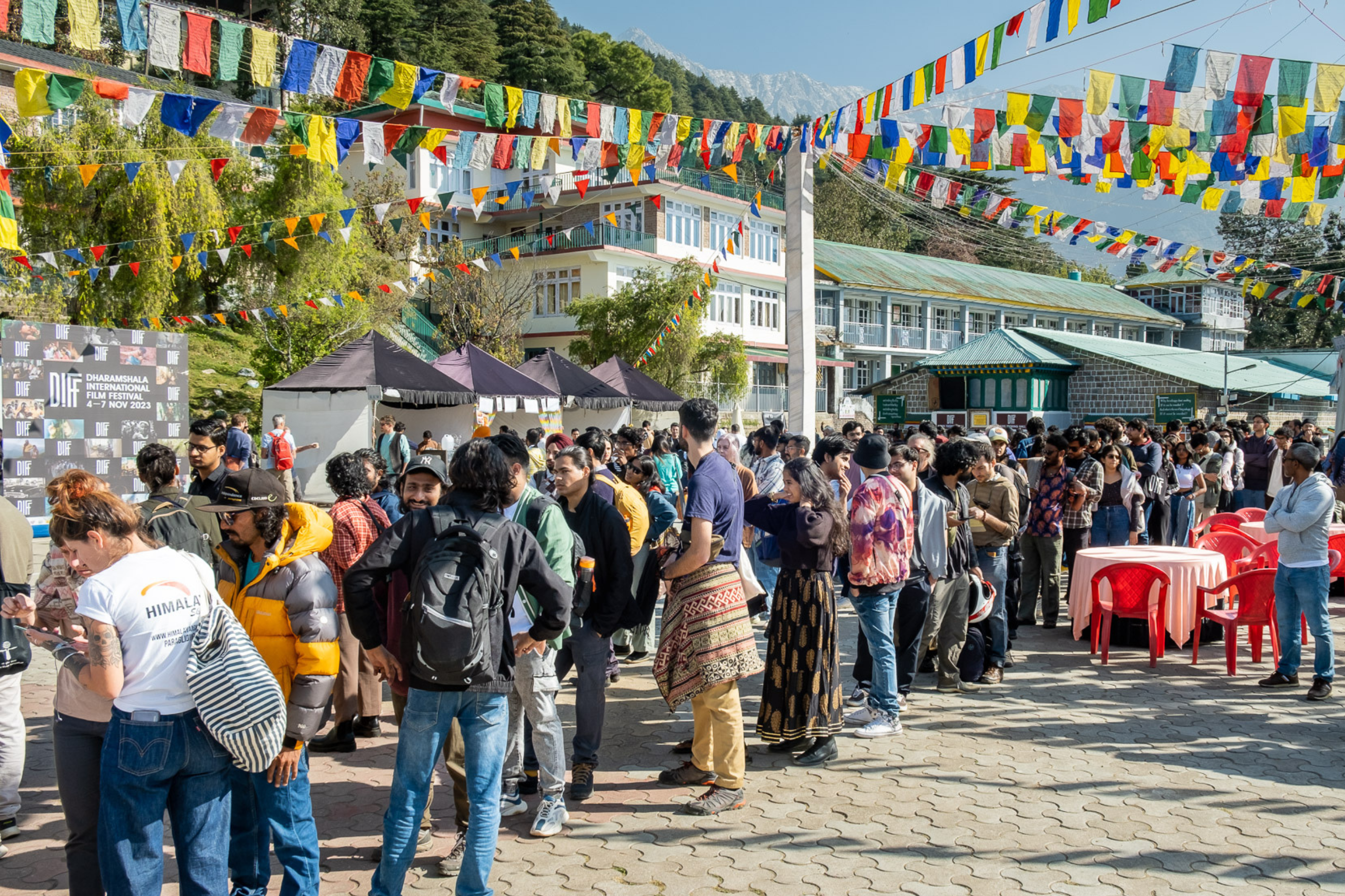
5. Audience at DIFF 2023 © Dharamshala International Film Festival
Cover Image: Audience in an Inflatable Digital Cinema © Dharamshala International Film Festival
About the Interviewees
Indian-Tibetan filmmakers and artists, Ritu Sarin and Tenzing Sonam have been working together for over thirty years. After completing their graduate studies in the US, they worked as independent filmmakers in London for many years before returning to India in 1996. Through their film company, White Crane Films, they have made several award-winning documentary films, two feature films and several video installations. Sarin and Sonam are also the directors of Dharamshala International Film Festival, one of India’s leading independent film festivals, which they founded in 2012.
Since 2012, culture360.ASEF.org has supported the outreach and visibility of over 65 arts events in Asia and Europe. We strive to continue supporting on-site and virtual arts events across the 2 regions through a variety of communication activities. To know more, take a look at our Media Partnerships page and follow us on Facebook and Instagram.