Living Across Distance: Curating the Asia-Europe Cultural Festival 2026
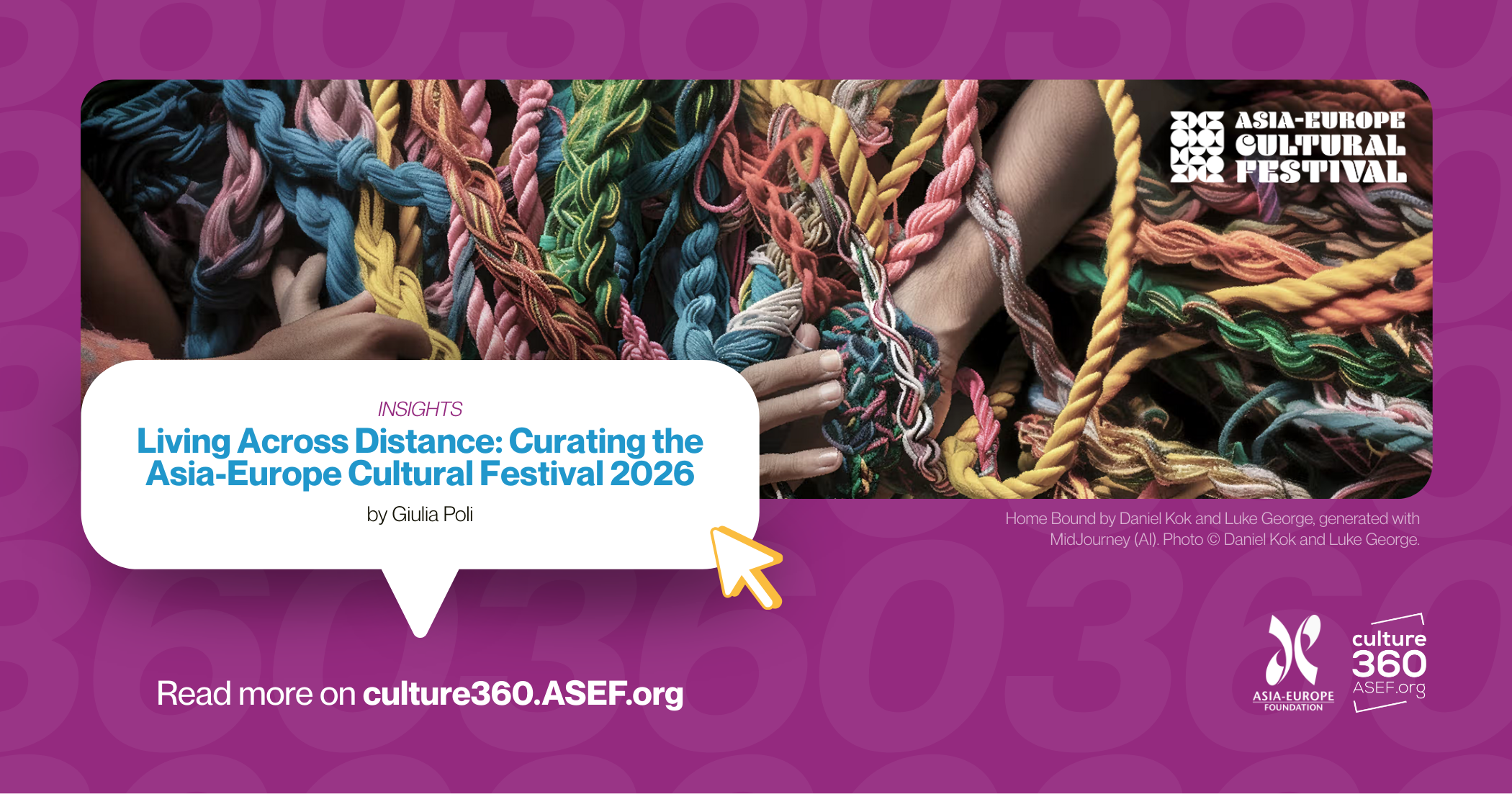
Curator and AECFest Festival Manager Giulia Poli reflects on the curatorial vision behind the 8th edition of the Asia-Europe Cultural Festival (AECFest), presented by the Asia-Europe Foundation in collaboration with the SPRING Performing Arts Festival in Utrecht, The Netherlands this May.
In a moment when global connections are both intensified and strained, cultural collaboration offers a way to reflect on how societies encounter difference. The Asia–Europe Cultural Festival (AECFest), an initiative of the Asia–Europe Foundation since 2018, celebrates artistic collaborations between the two regions and provides a platform for artists and cultural practitioners to meet through shared projects and dialogue. Its 8th edition, presented in collaboration with the SPRING Performing Arts Festival in Utrecht, approaches Asia–Europe relations not simply as a partnership between regions, but as a lived space of exchange.
How do we live together across distances — cultural, historical, geographical?
Distance today is no longer only spatial. It is temporal, digital, emotional. It stretches between continents, but also between bodies sitting next to each other — between mythology and memory, invitation and exclusion.
Unfolding as a “festival within the festival”, the 8th edition of the Asia–Europe Cultural Festival explores Asia–Europe collaboration as a lived condition: embodied, negotiated, and constantly shifting. Rather than treating it as a geopolitical abstraction, the festival considers how connections unfold in practice — through migration and mythology, public gathering and digital culture, shared rituals, and everyday gestures.
Presence becomes a central thread of this year’s festival programme. The festival opens on 14 May with a contemporary dance double bill by South Korean choreographer Sung Im Her, who presents Everything Falls Dramatic and Tomorrowisnowtodayisyesterday (TiNTiY). In Everything Falls Dramatic, fragility and resilience emerge through the body, offering a mediation on vulnerability and solidarity amid continual loss. TiNTiY extends this reflection into the mediated gaze of digital culture, where time collapses, identity fractures across platforms, and visibility becomes both currency and burden. Together, these works hold a mirror to a hyperconnected world where Asia and Europe are only a scroll apart — yet understanding remains fragile.
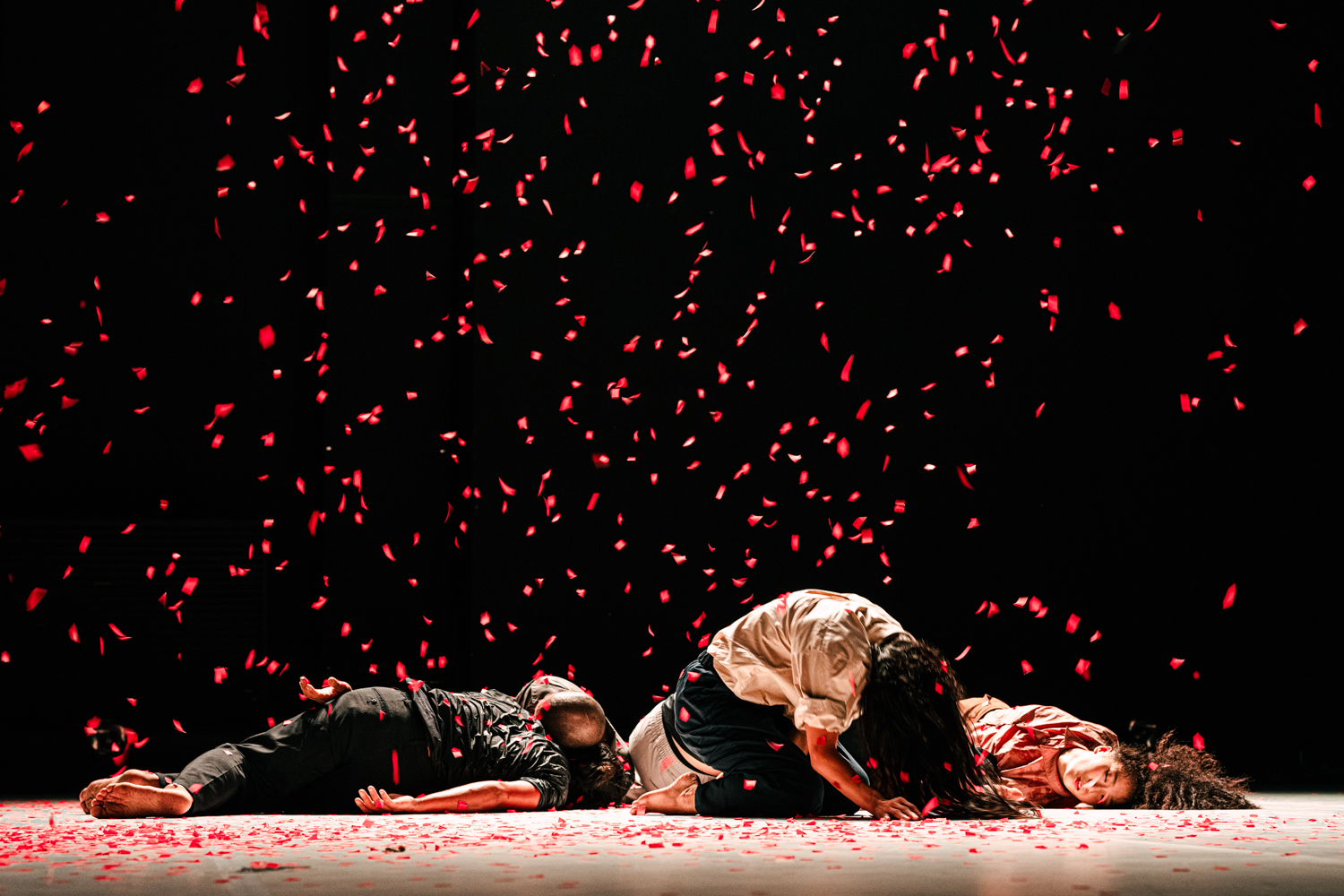
1. The opening night of the 8th Asia-Europe Cultural Festival features a contemporary dance double bill, Everything Falls Dramatic and TiNTiY. Photo © Sung Im Her.
This embodied enquiry continues in SoftMachine, a long-term project by Singaporean performance maker Choy Ka Fai. Developed over the past decade, the project traces contemporary Asian dance through portrait performances and lived collaborations. In Utrecht, Ka Fai presents the chapters emerging from his work with artists in Indonesia and India, where intimate gestures and ritualised encounters explore how connection persists, shifts, or falters across geography, memory, and cultural difference.
Holding the Unsaid brings cinema into this reflection. If performance foregrounds the body as a site of encounter, the camera here becomes a device for attentive listening. Between the two continents, Spanish filmmaker Adrià Guxens turns his gaze toward China and Japan, dwelling in pauses and atmospheres, and revealing how memory, identity, and belonging are negotiated across cultural and generational divides.
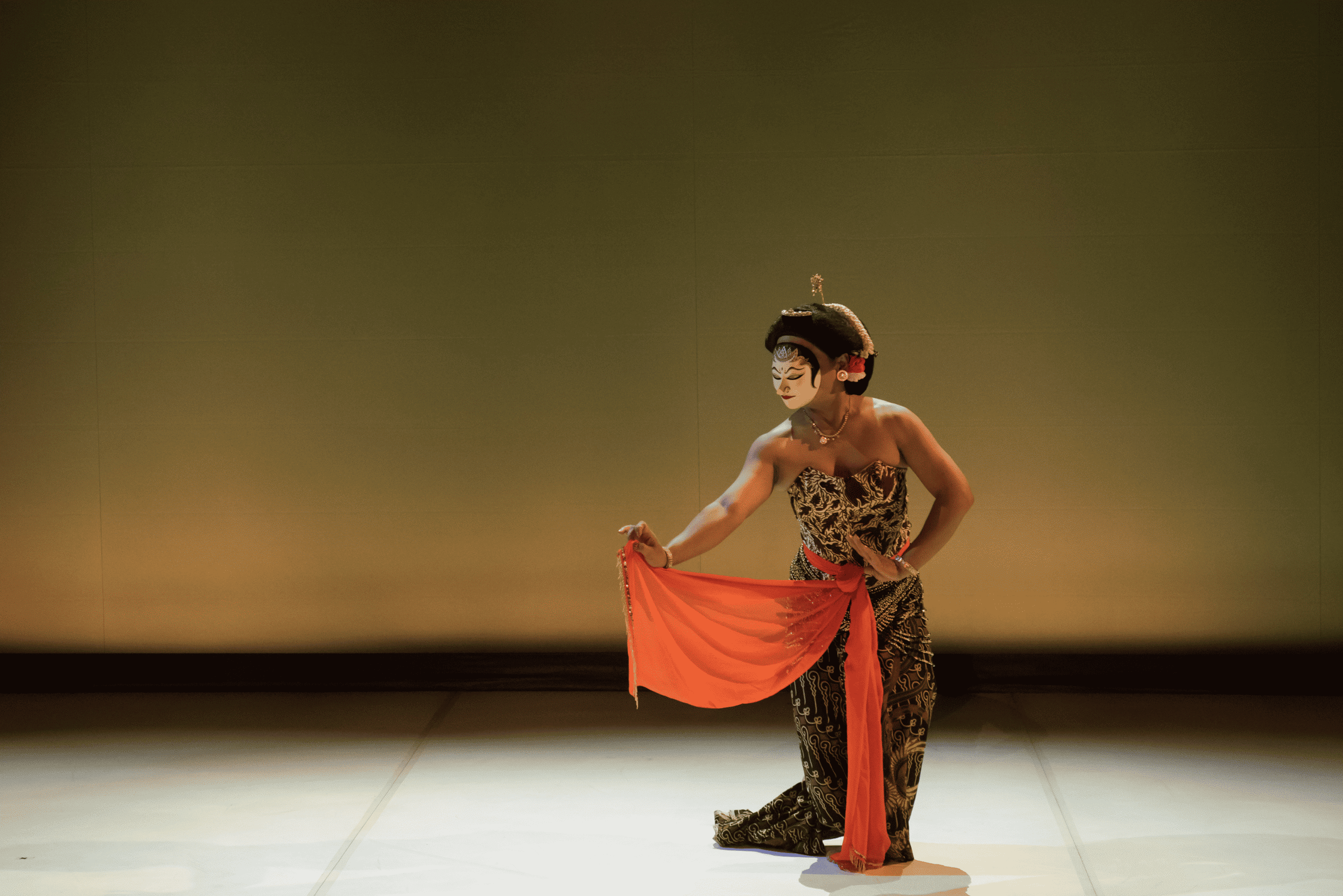
2. SoftMachine weaves together a decade of experimentation in dance-making, through the lens of Asian artists. Photo © Law Kian Yan.
Questions of access and belonging are equally pressing. Wait To Be Seated, a collaboration between two female collectives — Sandbox Collective from Bangalore and She She Pop from Berlin — reflects on hospitality, hierarchy, and who is invited into spaces of dialogue, while also probing the imbalances of power and voice between different cultural and institutional contexts.
Public space, too, becomes a testing ground. Home Bound, a giant tactile woven installation unfolding in one of Utrecht’s main squares by Singaporean multidisciplinary artist Daniel Kok and Naarm/Melbourne-based artist Luke George, uses weaving as a metaphor for social interaction, exploring how the threads of our lives intertwine to create a vibrant social fabric. The work examines attachment to people and place, showing how “home” is shaped across migration, language, and memory.
Between Asia and Europe, belonging is rarely singular; it is carried, shared, and sometimes contested.
In IsLand Bar, multidisciplinary Japanese duo Orangcosong turn a bar into a temporary gathering point — suspended between isolation and encounter — where strangers meet and differences are not erased but navigated. In this new iteration, they collaborate with Asian artists based in Europe, expanding the work’s focus on migration, displacement, and cross-cultural encounter.
Similarly attentive to the micro-politics of gathering, The Bench (By Accident) draws attention to the smallest architecture of public life: a bench as invitation, as boundary, as site of accidental diplomacy. This new work by the Singapore-German duo Ashley+Domenik builds on a collaboration that AECFest has supported since 2024.
These works remind us that coexistence often begins in informal spaces, in moments that precede the official agreement.
The programme also turns to myth and play as tools for reimagining power. LILITH.AEON, a durational immersive performative installation by the Japanese-French duo Aoí + Esteban, revisits mythic genealogy to unsettle dominant narratives and propose alternative frameworks of power, presence, and legacy. Meanwhile, Engeki Quest (also by Orangcosong) transforms spectators into participants through a guidebook of Utrecht mapped by social relations rather than landmarks. Building on previous iterations, the project continues to offer new perspectives on everyday environments and seeks to pierce the “invisible walls” that divide people.
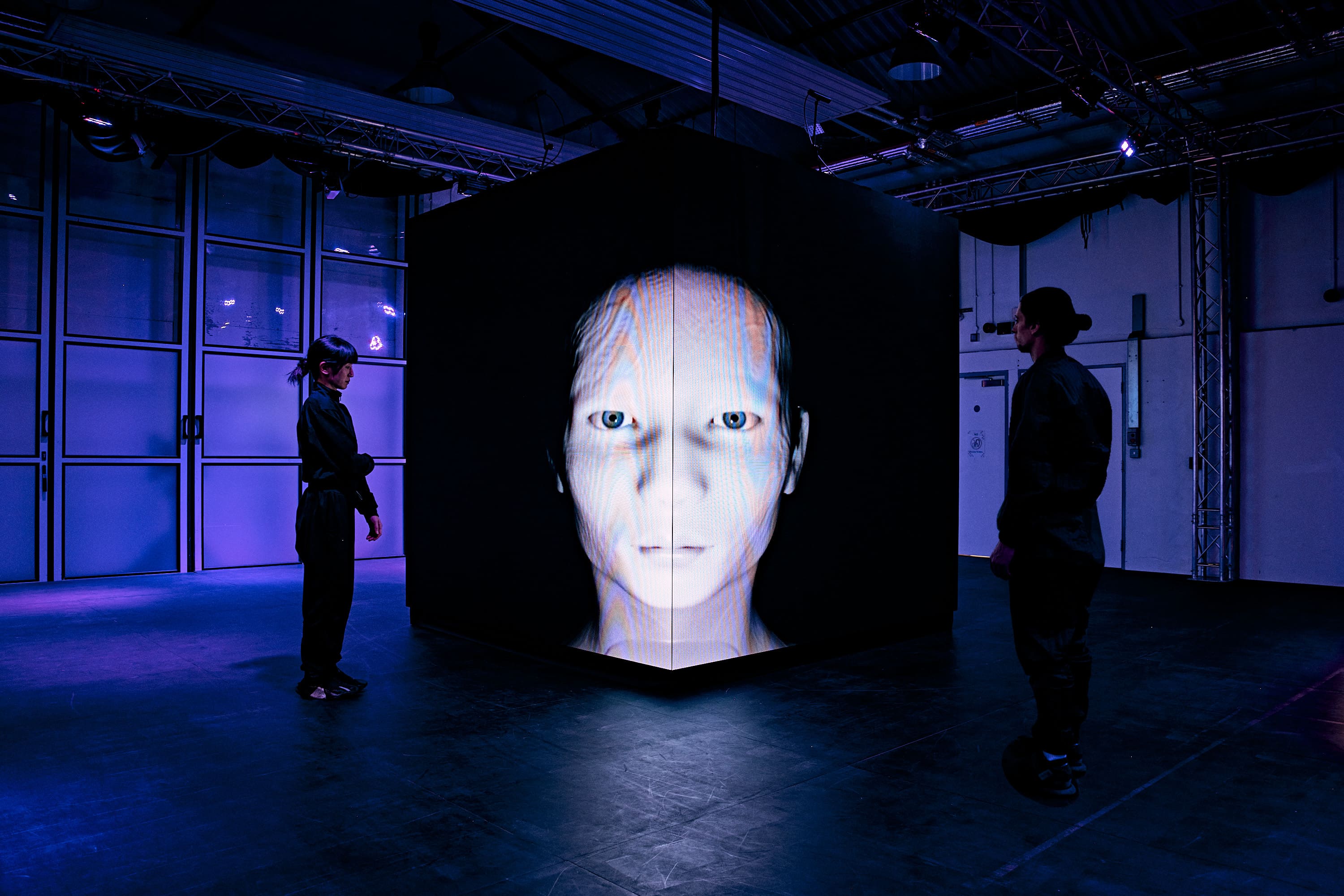
3. Explore the future of humanity and AI, with the immersive performative installation, LILTH.AEON. Photo © AΦE.
By collapsing the distance between stage and audience, these works invite audiences to dialogue collectively rather than observe from a distance.
Through the festival programme, Asia–Europe relations appear in motion: sometimes harmonious, sometimes tense, always in the making. Dialogue emerges not as an abstract principle, but as something enacted: in bodies, in public space, in shared rituals, in contested histories.
This year, AECFest will also launch its first festival CAMP, a new discursive and communal platform embedded within the festival’s framework. Conceived as a space for sustained encounters rather than rapid exchange, the CAMP gathers mid-career producers from Asia and Europe in a temporary shared environment throughout the festival. If the performances ask how we live together across distance, the CAMP inhabits that question in practice — through collective reflection, informal dialogue, and moments of friction and care.
Finally, within Spring’s talks programme, the festival will host a panel discussion on decolonising narratives, bringing together artists and institutional voices, to address questions of restitution, representation, authorship, and authority — asking how cultural practitioners today can move beyond inherited hierarchies toward more equitable forms of storytelling.
By creating platforms for discussion, the festival reaffirms how meaningful collaborations require time, proximity, and the courage to remain in conversation beyond the stage.
Rather than presenting a singular narrative, AECFest 2026 embraces multiplicity. It acknowledges asymmetries while sustaining mutual presence. It proposes that equality begins not with agreement, but with the willingness to sit together — to wait, to listen, to move.
Cover image: Home Bound by Daniel Kok and Luke George, generated with MidJourney (AI). Photo © Daniel Kok and Luke George.
About the Author
Giulia Poli is an Italian cultural manager and curator with over 17 years of experience in the arts and culture sector. Throughout her career, she has curated more than 300 cultural projects across festivals, theatres, museums, and public spaces, commissioning new works and developing international collaborations. Before joining ASEF, she had held key roles at cultural institutions across Europe and Asia, including Head of Programming for Theatre and Dance at Centro per l’Arte Contemporanea Luigi Pecci (one of the most important Italian contemporary art museums) and consultant for UNESCO.