Quiet Struggles: The Unspoken Realities of Lao Artists and Cultural Wellbeing
The article highlights an underlying theme of unsustainability, where Lao artists and cultural organisations are stretched to their limits due to weak structural support, the constant pressure to achieve financial viability and more. Within Lao's quietly evolving arts and cultural scene, it calls for greater recognition and support of the emotional and psychological wellbeing of those shaping the creative ecosystem.
Quiet Progress and the Disruption of COVID-19
The art and cultural landscape in Lao PDR has been unfolding quietly over many years, shaped by gradual development and small but steady steps forward. When COVID-19 arrived, this slow progress was pushed back almost to the beginning. Opportunities collapsed, cultural spaces closed, and artists carried the emotional weight of uncertainty in ways that were rarely acknowledged.
As recovery began, the fields of art, culture, and innovation slowly started to take form again, guided more by lived experience than by established structures. Communities experimented with new ways of creating supportive environments, hoping to rebuild what had been lost.
Yet behind these visible efforts, the emotional world of artists remains largely unseen. Their creative strength is shaped by cultural expectations that encourage silence, by years of instability that have forced them to be resilient, and by the emotional weight they carry without expressing openly. Within this quiet, their unspoken struggles become visible.
Unseen Emotional Labour in a Developing Ecosystem
At the same time, although these struggles appear personal at first, they reflect deeper structural issues within the country’s developing creative ecosystem. Limited infrastructure, weak institutional support, and the absence of sustained cultural dialogue continue to create emotional and professional strain on many artists. These challenges are not personal shortcomings but systemic gaps that policymakers and cultural institutions in Laos must address more seriously.
This becomes even clearer when we look closely at the everyday realities of artistic work. Across field research and conversations with artists, a clear narrative appears. Many artists and cultural professionals continue creating while carrying emotional labour that remains invisible to most people around them.
This labour includes pressure to prove that art is a legitimate profession, the quiet guilt of pursuing a path without stable income, and the exhaustion of performing multiple roles at once.
In Laos, an artist is rarely only an artist. They are also administrators, marketers, communicators, fundraisers, and negotiators. These responsibilities consume time and emotional capacity, leaving little space for the deeper nourishment that creativity requires.
Isolation, Vulnerability, and the Weight of Creative Expectations
Beyond these pressures, the experience of isolation intensifies them further. During my site visits or small gatherings, a scheduled one hour meeting often extends into three. What begins as a simple update becomes an emotional release.
Artists speak of the uncertainty that surrounds their practice but also of the difficulty in finding someone who can listen without judgement. Friends outside the sector often reduce artistic challenges to financial issues. Fellow artists sometimes struggle to share openly due to unspoken comparison and competition. Senior artists offer encouragement but generational differences make it hard for emerging creatives to relate their specific struggles. As a result, many emerging artists face an emotional dilemma of who they can trust with their authentic thoughts.
This emotional tension eventually reaches into their creative process. Many artists express a desire to produce work that can guarantee sales, yet such certainty does not exist in the Lao context. As a result, they often depend on commissioned work, which leads to creative fatigue.
During The XYZ Art Centre’s Art Connect event, one artist shared,
“I have not painted for five months now. Every time I imagine the canvas, I can only think about how to satisfy the commissioner, and I cannot bring myself to start.”
When asked what might help him reconnect with his artistic spirit, he said, “I want to drive my motorbike to the mountains and paint whatever I see, to speak to nature and people, but I cannot because I have family.” Yet his experience also reflects the broader structural context.
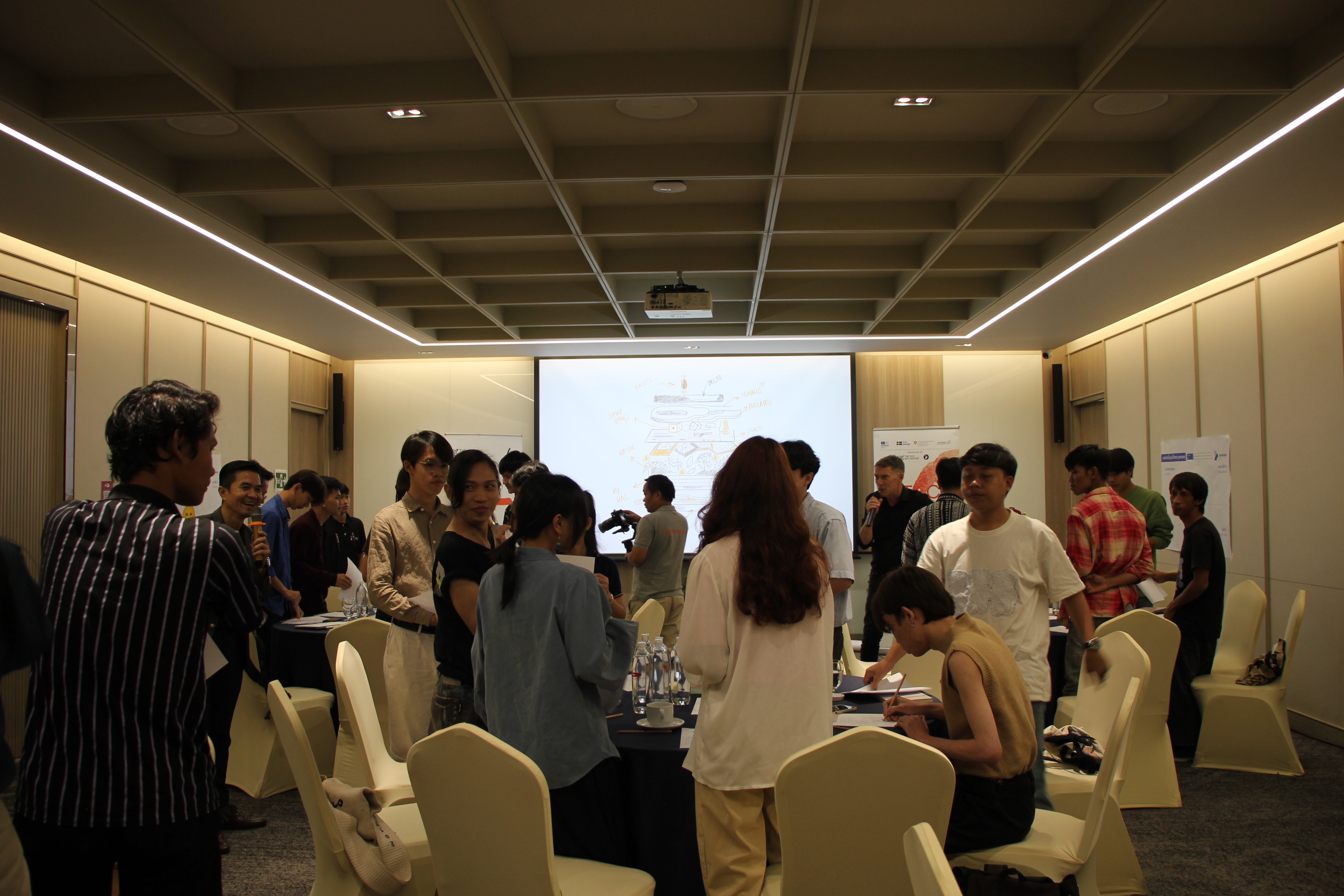
1. HATCH - Art Connect Workshop hosted by The XYZ Art and Culture Center. Photo © The XYZ Art and Culture Center.
Structual Barriers and the Absence of Support Systems
Structural limitations further complicate these challenges. Artists speak of unclear selection processes, limited platforms to exhibit work, and the absence of supportive infrastructure. Mentorship remains difficult to access. Even among emerging artists, support exists but it is tangled within invisible threads of comparison. These realities amplify self doubt and deepen the quiet sense of isolation that many learners and practitioners carry.
Mental health concerns have recently emerged as a public topic in Laos, with initiatives such as Wecare and Gamlangchai contributing important awareness raising efforts. Wecare is a volunteer driven mental health awareness group that offers public education sessions and basic emotional support. Gamlangchai is a youth led wellbeing initiative that focuses on stress management, community based activities, and early mental health literacy.
However, their capacity remains limited, and they currently have no programmes focused on art and cultural professionals. Their work is done after full time jobs, with limited resources and reach. This reflects a wider cross sectoral issue. Although public conversations on mental wellbeing are growing, cultural workers remain largely absent from formal support systems. Few artists possess health insurance, and even fewer have the means to seek professional mental health services.
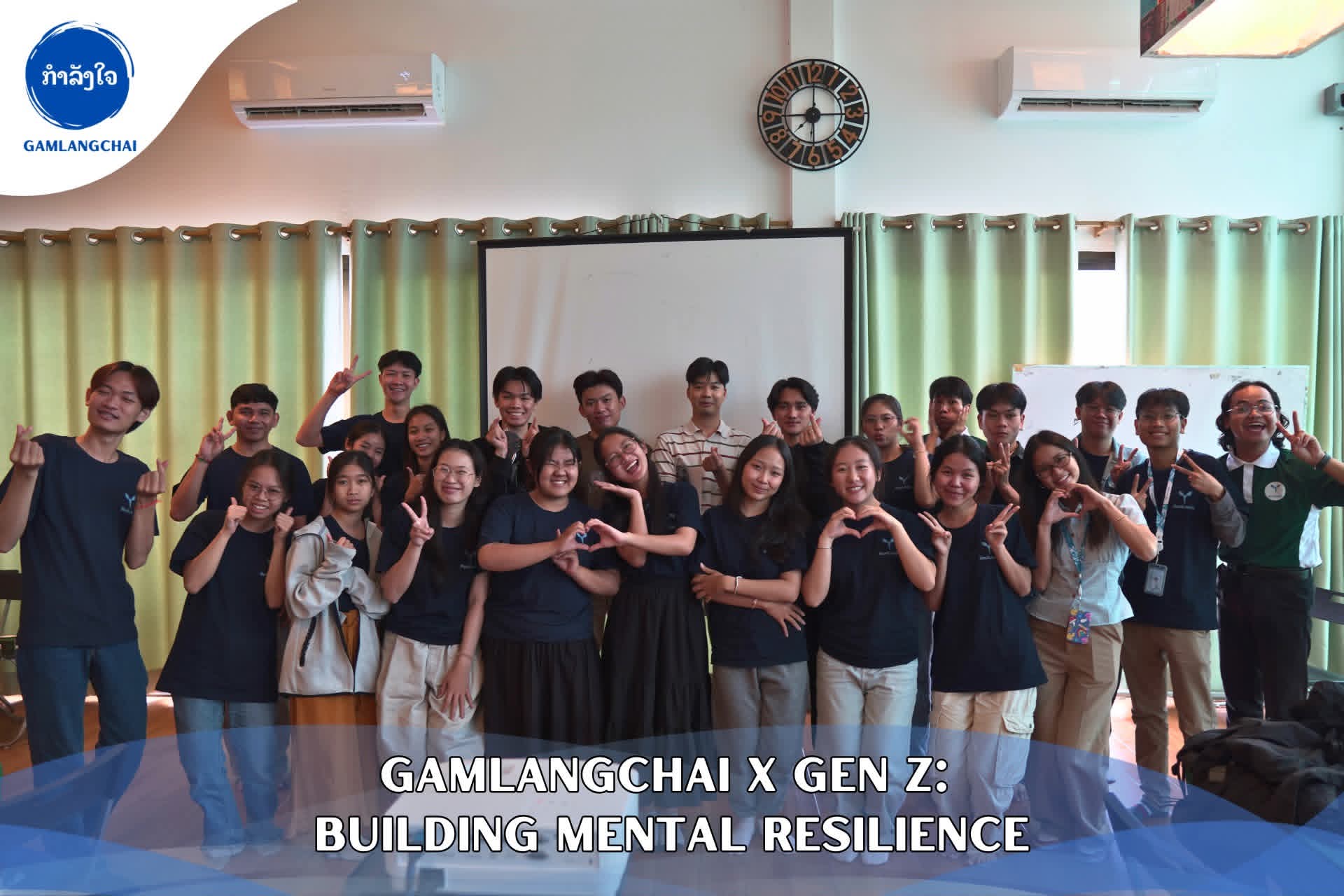
2. Building Mental Resilience initiatve by Gamlangchai in 2025. Photo © Gamlangchai.
Cultural Wellbeing and the Path Forward
These gaps highlight why the concept of cultural wellbeing is becoming increasingly important. Cultural wellbeing, while still an emerging concept in Laos, urges society to look beyond artistic output and consider the emotional and psychological health of those shaping cultural identity.
Yet cultural planning and development frameworks rarely consider the inner experiences of cultural practitioners. Without attending to their emotional wellbeing, strategies for cultural sustainability remain incomplete. Creativity cannot flourish solely through infrastructure or funding. It requires a sense of safety, understanding, and recognition.
Despite these gaps, resilience among Lao artists remains quiet but remarkable. Some adapt their style to survive. Others return to creation after long emotional pauses. Yet each return brings renewed pressure, expectations, and the risk of falling into familiar cycles. Even cultural organisers and curators feel this emotional burden.
A foreign curator based in Laos shared the difficulty of supporting young artists while recognising the limitations imposed by the broader system. Cultural workers themselves often carry unspoken stress, finding release only in private moments. It is not the absence of appreciation that overwhelms them but the weight of unspoken responsibilities that accompany cultural work.
Yet these quiet struggles do not exist in isolation. These struggles should not be understood as exclusive to Laos. They reflect a broader regional pattern found in countries where creative ecosystems are still developing. ASEAN is rich in cultural diversity, and this diversity requires a sensitive and informed approach to wellbeing. Mental health must be recognised as a foundational element of cultural vitality. Policies and investments must reflect the emotional realities of cultural practitioners, not only their creative output.
In the end, the quiet struggles of Lao artists reveal a deeper truth for the region. Cultural sustainability depends not only on infrastructure, training, or economic opportunity but on the wellbeing of those who imagine, create, and inspire.
Strengthening cultural wellbeing requires empathy, investment, and the courage to acknowledge what has long remained silent.
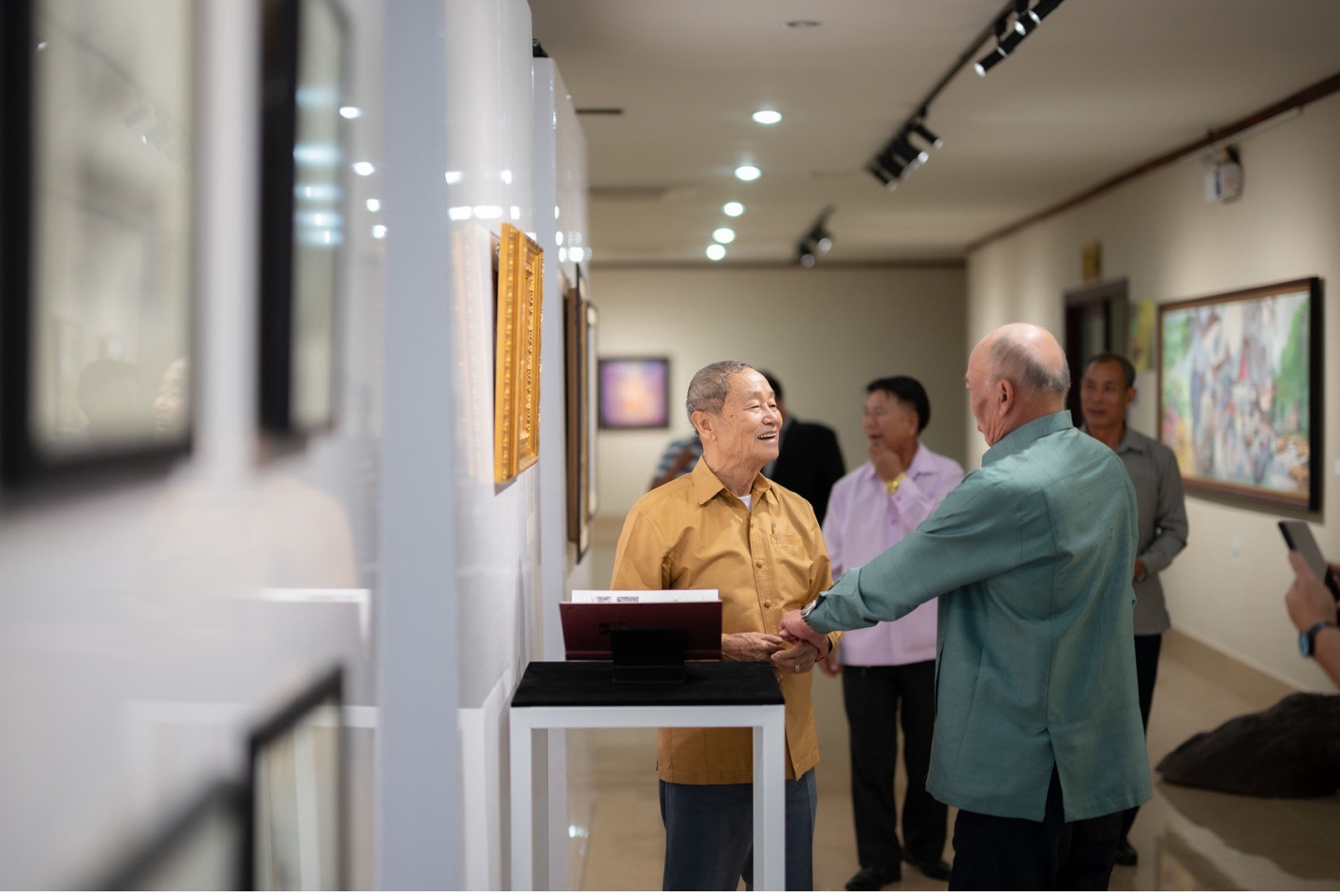
3. Lao national artists reconnecting. Photo © The XYZ Art and Culture Center.
Cover image: Artist Souphalak Phongsavath working on her artwork at the studio. Photo © Souphalak Phongsavath.
Explore the arts and cultural sector of Lao PDR further with Rooted in Practice: A Mapping of Lao PDR's Creative Ecosystem. This report maps out existing cultural trends, identifies gaps and opportunities to do more for the arts sector in Lao PDR.
About the Author
Manithip Vongphachanh is an arts manager passionate about driving strategic efforts to promote artistic excellence and community involvement, curating exhibitions and educational initiatives that enrich our cultural fabric. Her mission is to foster an inclusive, creative environment and elevate awareness around ethical practices in both art and fashion.