
Philippine art groups embed care into sustainability
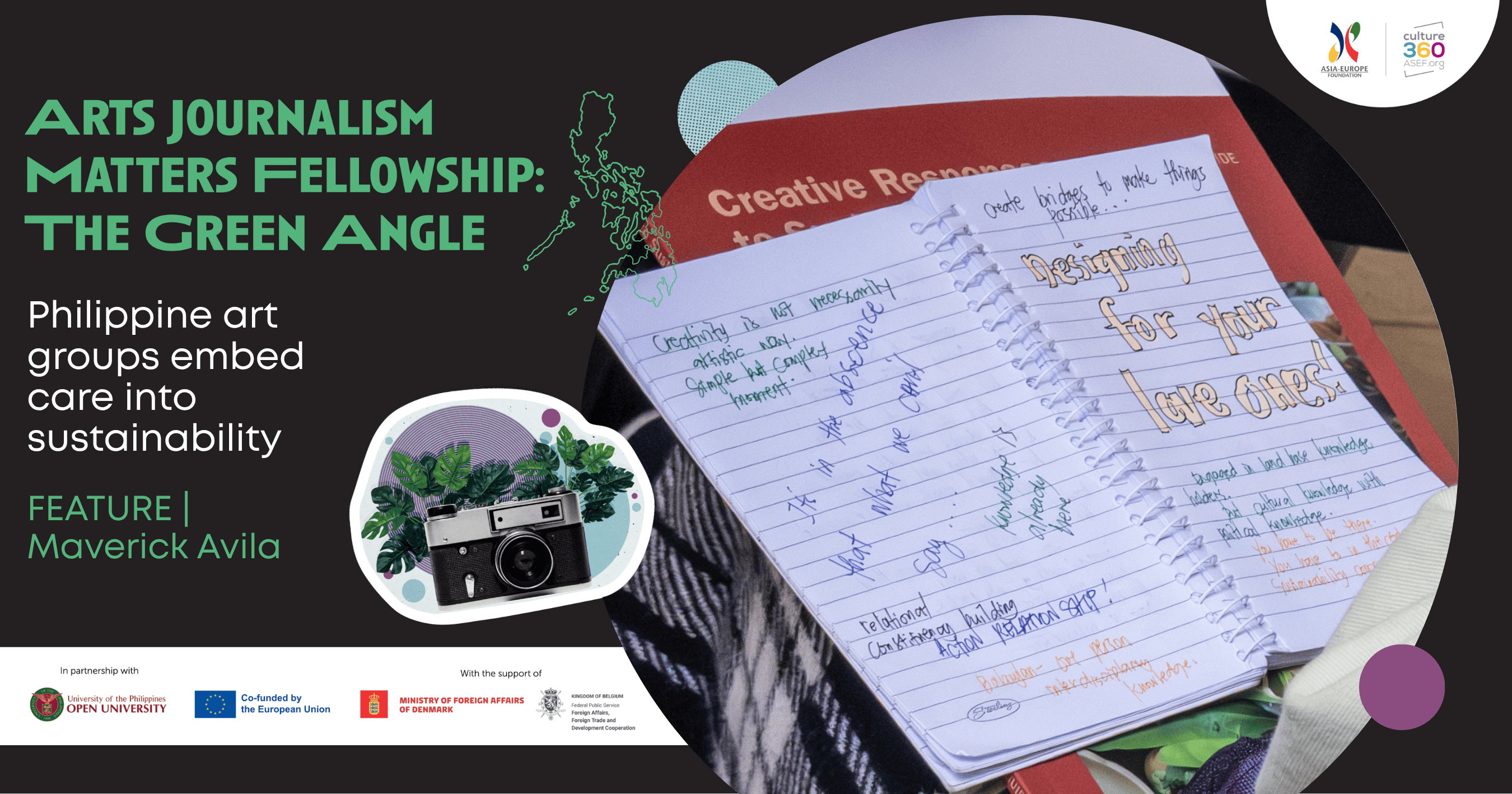
As part of the Arts Journalism Fellowship: The Green Angle, arts journalist Maverick Avila reflects on how Philippine art collectives are redefining sustainability as a practice of care, grounded in long-term commitment, collaboration, and respect for diverse knowledge systems. At the launch of the Green Guide for the Philippines, artists and scholars emphasised care as a method. The article documents a conversation that in the Philippine context, sustainability in the arts emerges not from grand interventions but from everyday, relational practices of care.
"How do we become good ancestors?", is a lingering question I still remember weeks after attending 'Creative Pathways to Sustainability: Launch and Roundtable on the Green Guide for the Philippines', where select leaders of featured art collectives convened for a roundtable discussion at the UP Manila Museum of a History of Ideas last February 9, 2026.
Published by ASEF Culture360 in collaboration with the University of the Philippines Open University, the Green Guide for the Philippines maps 18 art initiatives engaging with sustainability across Luzon, Visayas, and Mindanao. Part of the Creative Responses to Sustainability series, it positions the arts as active agents in confronting ecological crises.
Yet beyond serving as documentation, the guide raises a sharper set of questions: how can it provoke reflection among local and global stakeholders working at the intersection of art, sustainability, and community engagement? How might such a framework centre artistic practice in responding to sustainability challenges while fostering care, responsibility, and collaboration? And how can it open new pathways that connect local arts practitioners and organisations committed to sustainability?
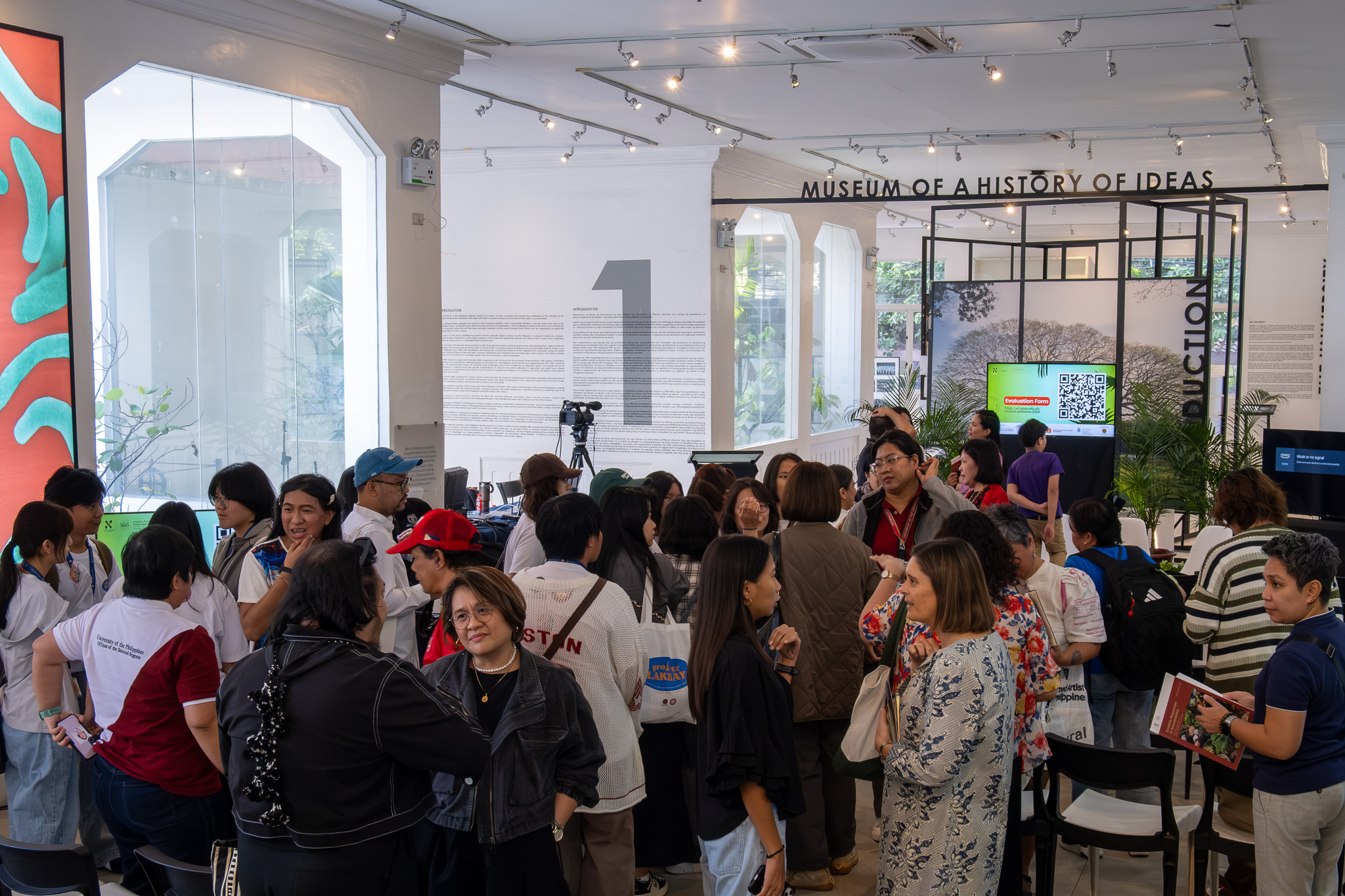
1. Post-roundtable discussion at the UP Manila Museum of a History of Ideas. Photo © Christian Paul Velo.
Rather than framing sustainability as a grand mission of ‘saving’ communities, or doing something monumental, speakers defined it as something more grounded and rooted in shared responsibility and long-term commitment. Their answer ultimately points to something urgent but simple: care.
Care is often treated as a basic instinct in community engagement, so basic it almost becomes negligible. In a conversation with Professor Diego Maranan, that assumption shifts. For him, sustainability is inseparable from care, not as a sentimental gesture, but as a deliberate practice that shapes how artists relate to communities and the environments they inhabit.
In my conversation with Dr. Maranan, he framed care not as sentiment but as method — one that structures how artists engage communities and environments. He outlined three axes: temporal care, or a commitment that extends beyond project cycles toward intergenerational horizons; distributed care, or an understanding of care as collectively held across networks rather than by any single actor; and epistemological care, or a deliberate openness to ways of knowing beyond institutional or academic frames. These dimensions, he suggested, become legible only when care is practiced with intention, as reflected in the roundtable discussions.
Care over Time
Maranan is also a transdisciplinary artist working across art, science, and speculative futures, and for him, care is not merely an ethical posture but a structural condition for sustainability.
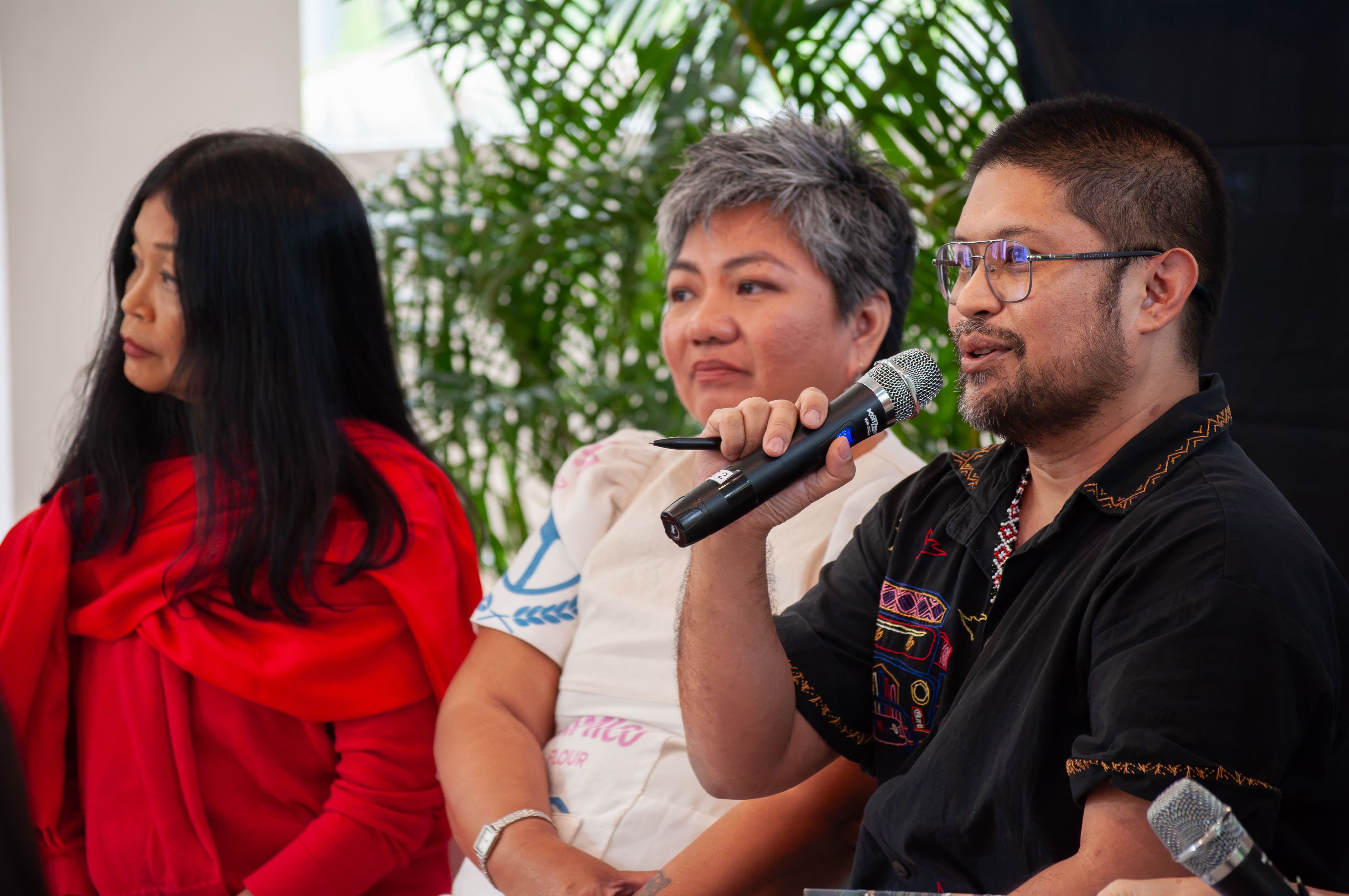
2. UPOU Professor Dr Diego Maranan during the roundtable discussions. Photo © Hanz Christian Natividad.
First, care, he argues, must stretch beyond the immediacy of projects, grants, and institutional cycles. “Temporal care asks us to think across generations,” said Maranan.
“The arts and culture sector has not been called upon to help imagine the future. Much of what we do is anchored in identity, preservation and heritage — but there is a greater need for future imaginaries,”
There is a need to enshrine artistic practice in reimagining what lies ahead according to Maranan. “Even just thinking fifty years down the line,” he added.
The question then becomes deceptively simple: How do we care not only for those around us today, but for those who will inherit what we leave behind?
That generational horizon resonates with practitioners like Ted Villanueva, who co-leads Youth Empowering Youth (YEY) Initiatives in Negros Occidental. Reflecting on the inevitability of generational turnover, Villanueva remarked, “Following the cycle of life, we are bound to die, and the next generation will have to take over before us.”
For him, facilitation becomes a practical method of long-term care: a way of equipping young people with the skills to address social, civic, and environmental challenges themselves.
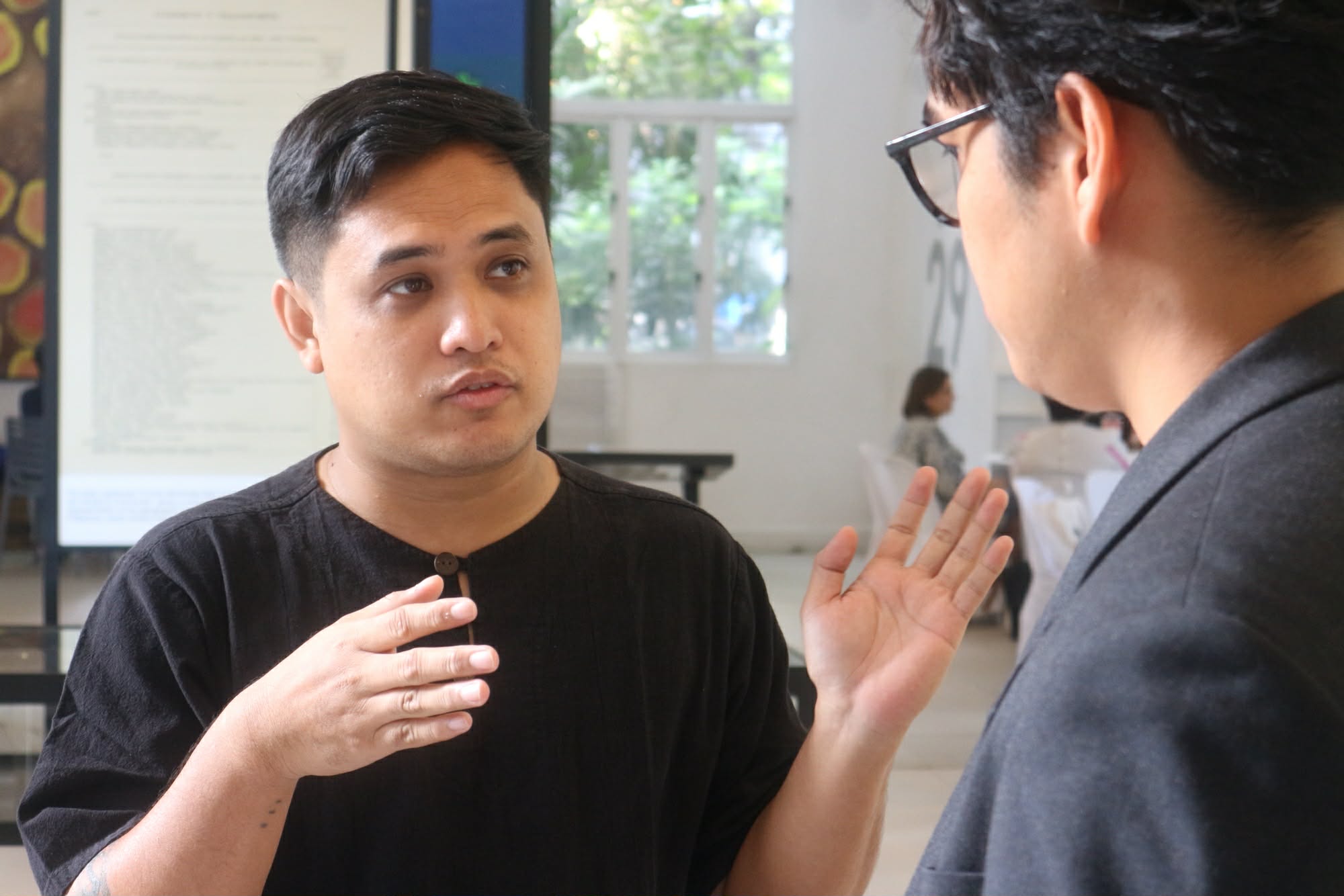
3. YEY Initiatives co-founder Ted Villanueva in conversation with arts journalist Maverick Avila after the roundtable discussion. Photo © Denzel Yorong.
Even amid resource constraints and shrinking civic spaces for youth, Villanueva maintains a stubborn optimism. “Laway ang ating puhunan (saliva is our capital),” he said, a phrase that underscores how conviction of the youth in collective dialogue often becomes the starting capital for grassroots work.
Care across Disciplines
In academic circles, transdisciplinarity is often celebrated in theory but in practice, it exposes tension.
“Everyone wants to talk about transdisciplinary work,” observed Maranan, “...but the moment you bring a physicist or an engineer into the conversation, friction arises, much less so with someone from the humanities.”
The challenge, he suggests, lies in bridging epistemologies that operate under different assumptions about what counts as knowledge, evidence, and value.
Nowhere is this tension more acute than in engagements with local and Indigenous knowledge systems. For Dr. Grace Nono, ethnomusicologist, scholar of Philippine shamanism, and founder of the Tao Foundation for Culture and Arts in Mindanao, knowledge is inseparable from care. “There are many organisations already doing this kind of work long before we even started,” she said, highlighting a lineage of practice often overlooked by outsiders.
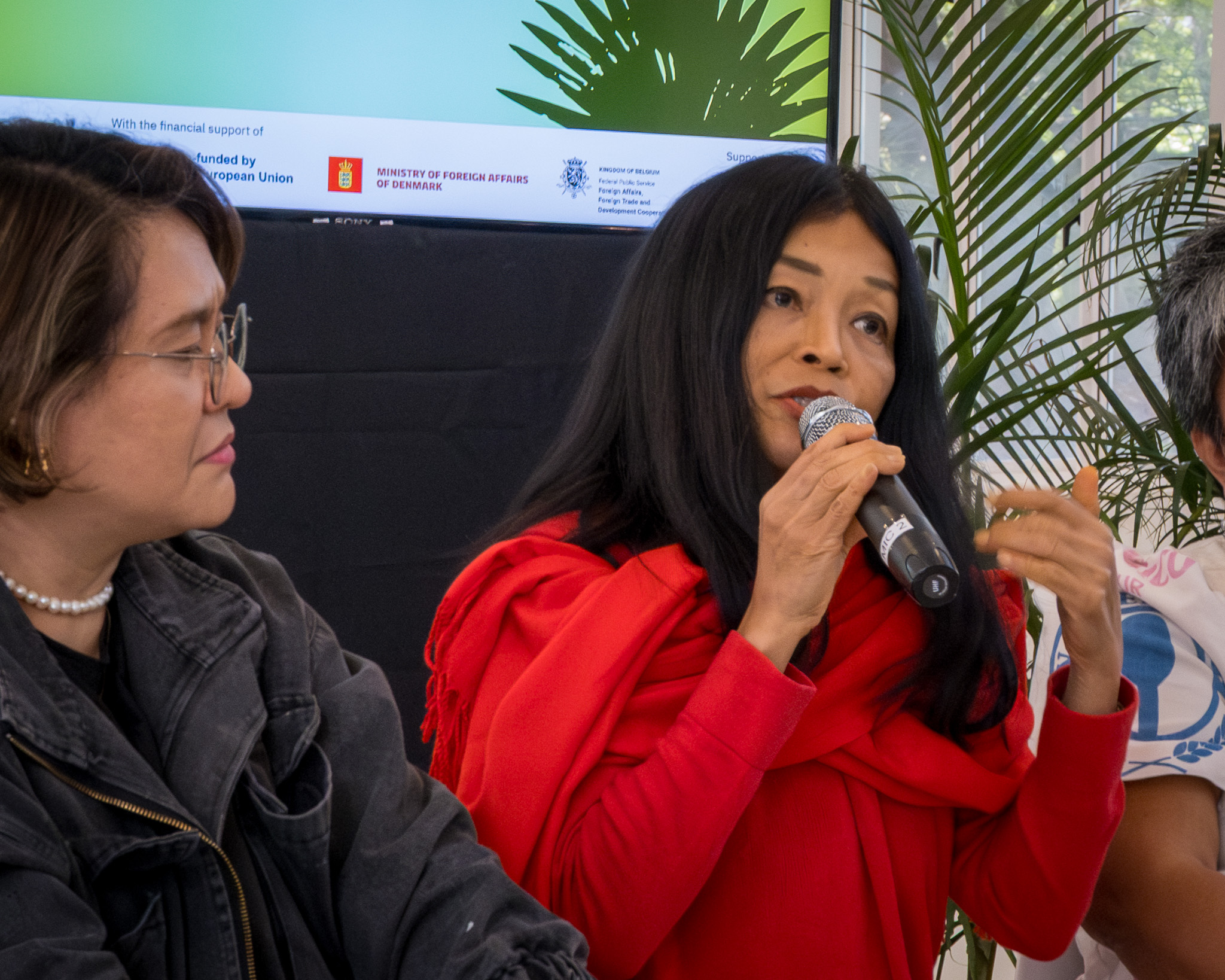
4. Founder of Tao Foundation, Dr Grace Nono, speaking to the roundtable audiences. Photo © Christian Paul Velo.
“The knowledge that the Tao Foundation engages with is, more often than not, embodied,” Nono explained. To engage with it requires more than reading texts or attending performances, it demands dialogue with living carriers, culture bearers, those who sustain traditions, rituals, and ecosystems through practice.
“If you want to support local and Indigenous knowledge, you have to recognise these carriers as equals to academic counterparts,” she said.
“Support should be reciprocal,” she emphasised.
“Even before you offer support, they may have already been sustaining communities and conserving ecosystems through their knowledge. Too much help, without understanding, can make things worse.”
Epistemological care, then, is fundamentally relational. In working with communities, ethical engagement is inseparable from land, ritual, and ancestral domains. When asked how to prevent misrepresentation, Nono’s response was unequivocal: “This is a deeply Indigenous way of being: before you till a field, you ask permission. Long before you arrive, there are already inhabitants — seen and unseen. You must communicate your intentions.”
It can be inferred that care is not a passive sentiment or a box to check, it is a disciplined attentiveness, a method of co-existence that recognises knowledge, land, and culture as co-constitutive, and insists that ethical participation begins with listening.
Archipelagic Care
Building on Grace Nono’s emphasis on reciprocity, artist-scholar Roselle Pineda exhorted participants to “throw that scholar ego!” when engaging with communities. In 2022, she highlighted the struggles of communities affected by the Kalinga Dam, demonstrating how her work with the Aurora Artist Residency Program and Space (AARPS) embodies care as relational, iterative, and distributed, a principle aligned with Dr. Diego Maranan’s framework of care.
Invoking Edward Lissant’s concept of archipelagic thinking, Pineda argued that projects cannot be imposed top-down. “Archipelagic thinking is not about urban or rural binaries. The curation and conversation are relational,” she said, emphasising how fieldwork often involves researchers, curators, artists, and community members as co-creators.
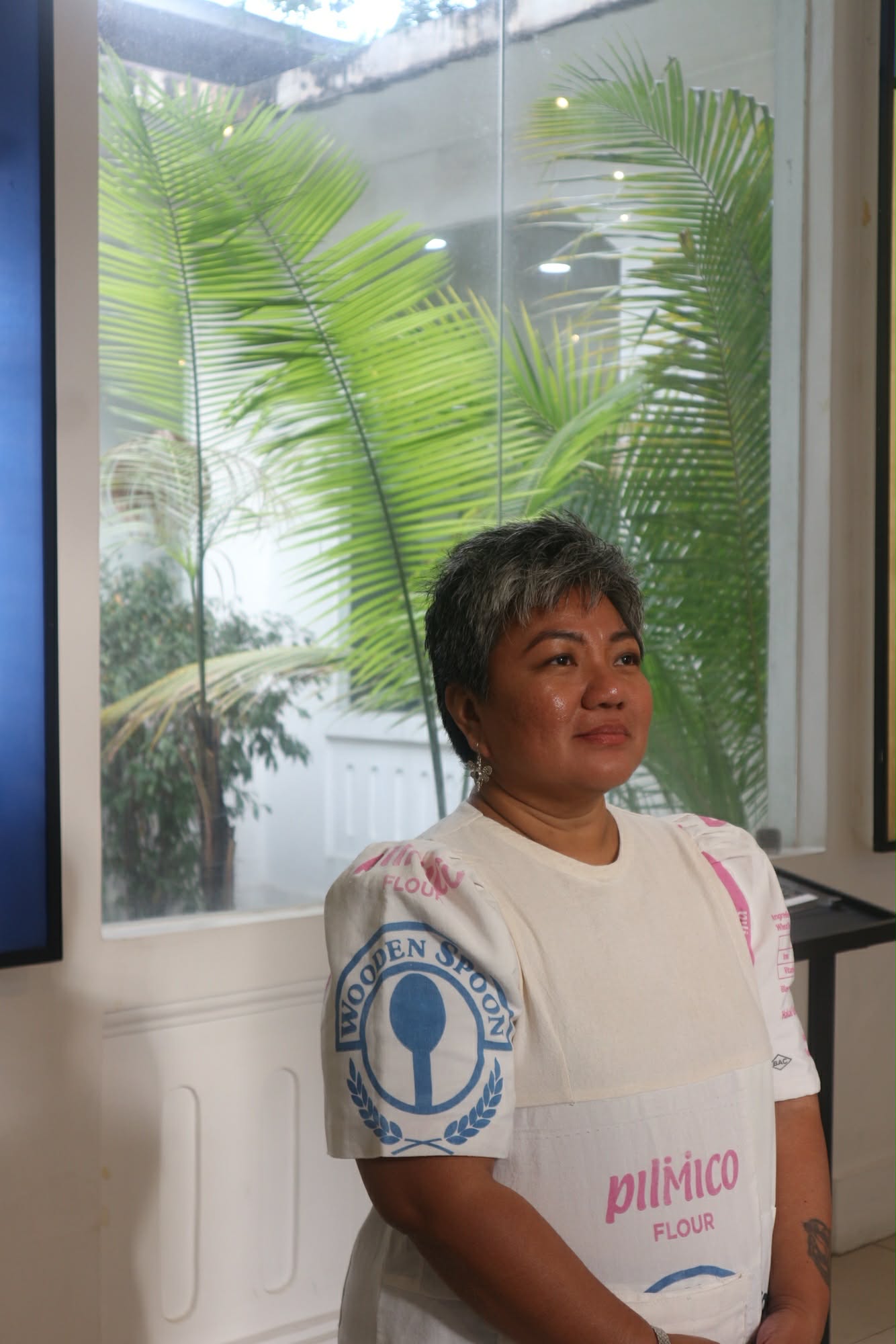
5. Portrait of artist-scholar Dr Roselle Pineda. Photo © Denzel Yorong.
Pineda framed engagement as distributed care in action:
“How do we best fit our projects to the community’s needs? We converse with people from different contexts and disciplines — not only for transdisciplinary expertise, but for relational knowledge. These processes are fluid and iterative, operating across timescales and social networks, often outside the rigid structures of government institutions, yet they are essential to meaningful and sustainable engagement.”
Care, Pineda argued, must flow archipelagically across communities and knowledge even through something as simple as conversation.
On Becoming Good Ancestors
The roundtable made clear that sustainability depends on care as a disciplined practice — temporal, epistemological, and distributed. From Maranan’s generational horizon to Nono’s embodied knowledge, and Pineda’s archipelagic, relational engagement, care is a method: a way to co-create futures.
“In art and science, becoming more human means caring for the planet for its own sake, not just ours,” Maranan said. “And that care begins with those closest to us.”
In an archipelago like the Philippines, this framework is not optional, it is essential for art to intervene meaningfully. Care in cultural work need not be monumental; it is through attentive everyday practices that sustainable communities are co-created.
Cover image: Attendee's notes from the roundtable on designing for your loved ones. Photo © Christian Paul Velo.
About the Author
Maverick Avila is a Filipino journalist and producer reporting on human rights, culture, and climate. His multimedia work appears in Bulatlat, CGTN, CCTV, and Al Jazeera. He is also a playwright and director, crafting theatre that brings local community stories to life.