Cultural Integrity as Method in Philippine Arts Journalism
As part of the Arts Journalism Fellowship: The Green Angle, arts journalist Denzel Yorong reflects on the ethical stakes of climate storytelling in arts and culture reporting. Drawing from discussions at the ‘Creative Pathways to Sustainability: Launch and Roundtable on the Green Guide for the Philippines’, this article argues that cultural integrity must function not only as legal protection but as journalistic method — one that recognises limit to interpretation, treats consent as relational, and understands creativity as infrastructure rather than content.
Climate reporting frequently turns to artists and Indigenous communities for stories of resilience, adaptation, and hope. Yet arts and culture journalism rarely interrogates its own role in shaping those narratives. At the recent 'Creative Pathways to Sustainability: Launch and Roundtable on the Green Guide for the Philippines', the most compelling insights were not about creative output, but about ethical limits — and what they demand from those who document cultural work.
How can urgent climate response stories be told without reproducing extractive forms of storytelling?
One useful anchor lies in the right to cultural integrity under the Indigenous Peoples' Rights Act (IPRA) of 1997. Enacted after decades of Indigenous advocacy, this Philippine statute is now widely recognised as a landmark and unique piece of legislation in the world regarding the protection of Indigenous rights. The IPRA outlines a comprehensive legal framework that acknowledges special rights, collectively called the four bundles of rights: to ancestral domains and lands, self-governance and empowerment, social justice and human rights, and cultural integrity. The fourth bundle, in particular, affirms Indigenous peoples’ rights to preserve and protect their traditions, institutions, and knowledge systems.
While crafted primarily to address land dispossession and resource exploitation, the law’s logic extends beyond territory. Cultural extraction — the appropriation or commodification of knowledge and practice — can occur through media as easily as through development projects.
The controversy involving content creator Nas Daily in 2021 offered a cautionary example. A proposed digital masterclass on traditional tattooing, featuring the celebrated mambabatok (hand-tapping tattoo artist) Apo Whang-Od, sparked national debate over consent, representation, and monetisation. The issue exposed a broader storytelling economy driven by speed and platform visibility, where cultural practices risk being flattened into consumable content.
Journalism is not influencer media, but it operates within similar pressures, particularly in climate reporting, where Indigenous stewardship and community-based creativity carry moral urgency and narrative appeal. When urgency meets audience demand, cultural practice can become illustrative rather than situated.
Discussions at the Green Guide roundtable, centred on protocols, long-term relationships, and collective consent, suggested that cultural integrity is not merely a legal clause, but a methodological framework. As a writer in the room, I found myself listening less for angles and more for guardrails:
- Artistic freedom is not absolute — and neither is journalistic framing
Cultural journalism often treats artistic freedom as inviolable. We celebrate experimentation, critique censorship, and champion expression without constraint.
But several speakers at the launch described something more nuanced. When working with Indigenous communities, artistic freedom operates within protocols. Certain rituals are not for public staging. Certain symbols are not for open decoding. Some knowledge is collectively held and cannot be attributed to a single author.
These limits are not restrictions on creativity; they are expressions of cultural sovereignty.
For journalists, this raises an uncomfortable parallel. We, too, exercise a form of interpretive freedom. We (re)contextualise works, draw connections, offer analysis. Yet when we cover community-based cultural practice — especially in sustainability contexts — interpretation can slip into overreach.
The climate beat has increasingly turned toward Indigenous ecological knowledge and grassroots environmental art. But when we frame these practices primarily as solutions for a global audience, do we risk flattening their cultural specificity? When we “translate” sacred or community-bound practices for readability, do we inadvertently strip them of context?
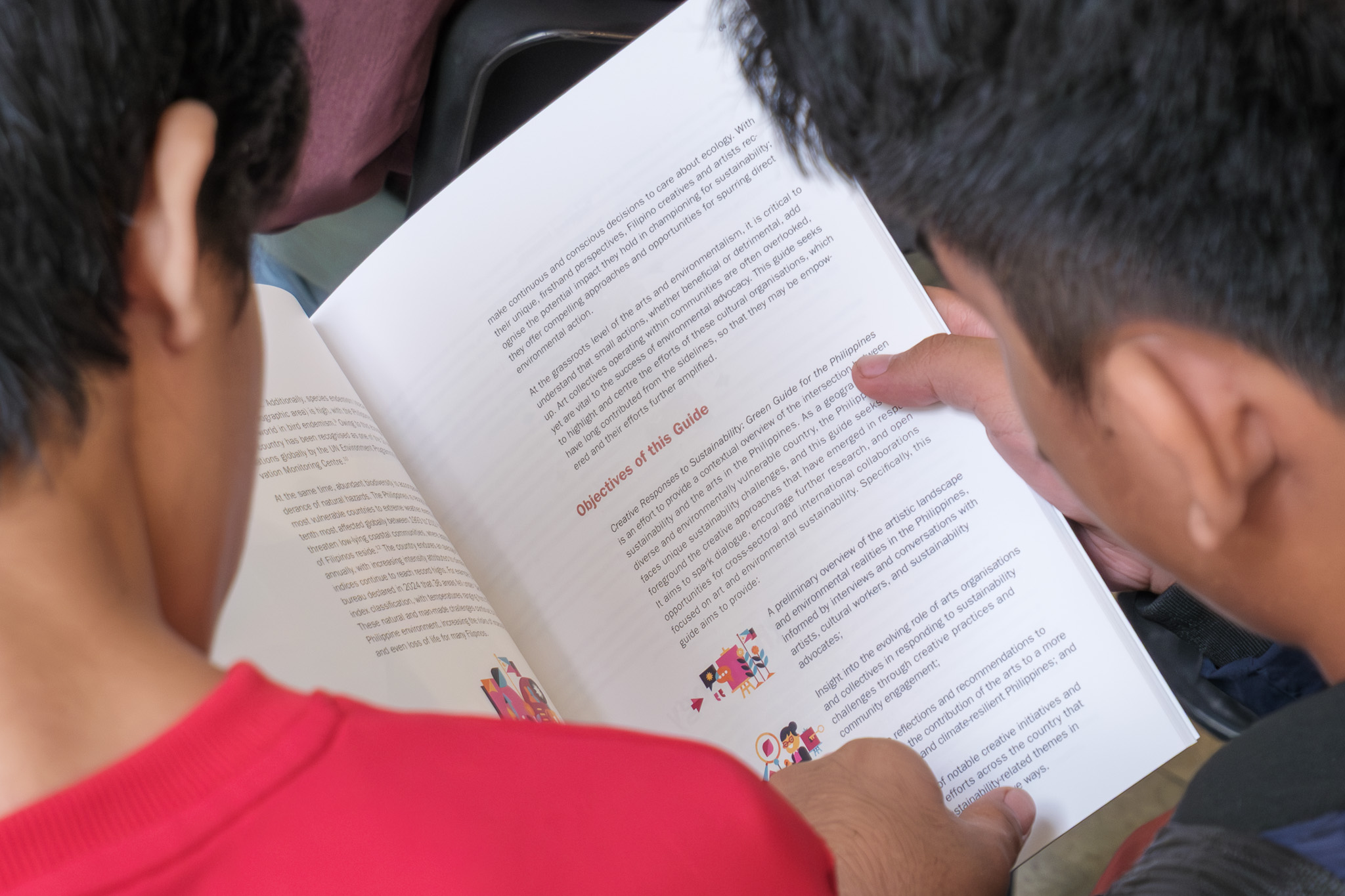
1. Attendees leaf through the Green Guide for the Philippines, engaging with its call for culturally grounded and ethically conscious creative practice. Photo © Christian Paul Velo.
2. Consent is not a release form — it is a continuing relationship
In newsroom practice, consent is merely treated as procedural: an interview recorded, a quotation confirmed, a release secured. But community-based cultural work complicates this model. Consent may be collective rather than individual. It may be negotiated over time and embedded within relationships that precede and outlast a single project.
The speakers at the roundtable described engagement measured in years rather than news cycles. Trust was built through sustained collaboration, shared spaces, and accountability beyond publication.
Roselle Pineda from Aurora Artist Residency Program and Space (AARPS) cautioned against “parachute” storytelling — arriving briefly, gathering material, and departing — which risks replicating asymmetries that environmental justice movements seek to dismantle.
Relational consent therefore extends beyond formal permission. It raises structural questions: Who benefits from coverage? Who shapes its framing? What obligations remain after dissemination?
Within a climate agenda attentive to justice, consent becomes part of ethical infrastructure.
3. Creativity is not a product — it is infrastructure
The Green Guide roundtable emphasised that creativity is not merely output — a mural, performance, or textile — but infrastructure. It is a methodology through which communities process environmental change, transmit ecological knowledge, and articulate land-based struggles.
This understanding resonated strongly with insights I gained during the hybrid residency I undertook in Panay Island as a Fellow of the Arts Journalism Fellowship: The Green Angle. In writing my article, When Craft and Curation Converge, I have come to learn that weaving sustains both livelihood and ecological memory. There, process-oriented exhibitions foregrounded art as a mode of inquiry into labour, materiality, and territory. Such practices function as communicative systems, particularly where formal political channels remain inaccessible.
For arts and culture journalism, this reframes the task. If creativity operates as infrastructure, reporting participates in that ecosystem. Coverage can strengthen these systems through context and rigour, or diminish them by reducing them to inspirational features or trend-driven narratives.
The ethical question shifts from "Is this compelling" to "What structures does this coverage reinforce?"
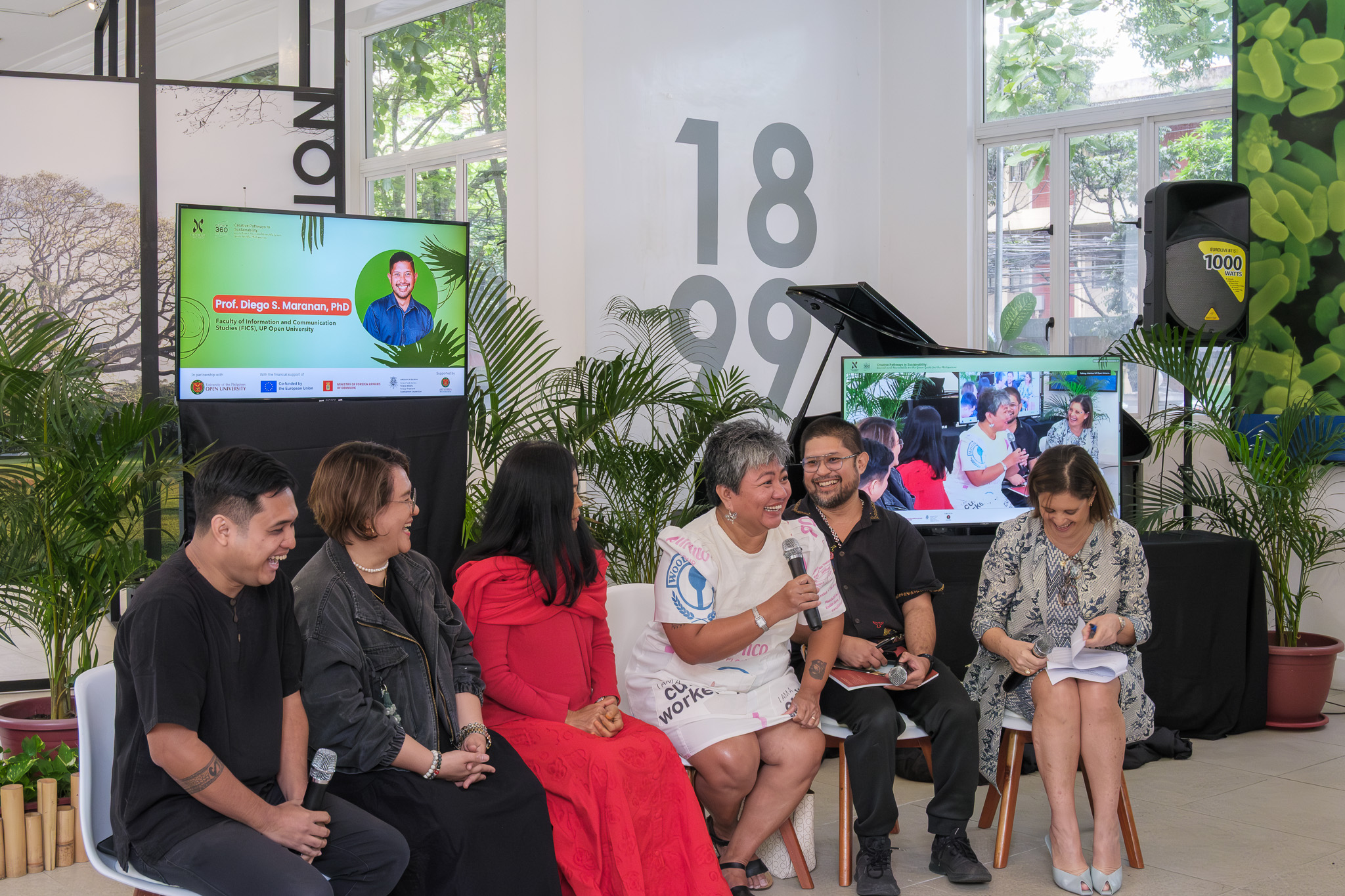
2. Speakers discuss their hopes, priorities and calls to action in support of a more just, caring and climate-resilient Philippines, using the Green Guide for the Philippines as a living tool. Photo © Christian Paul Velo.
Reporting with and for cultural integrity
The climate crisis will intensify, and so will the demand for stories that render it legible. Arts and culture journalism occupies a critical junction between environmental discourse and lived cultural practice.
Cultural integrity, as affirmed by law, recognises that culture is sovereign and collectively held. For journalism, it must also function as method: acknowledging limits to interpretation, treating consent as relational, and understanding creativity as structural rather than ornamental.
Urgency cannot justify extraction.
If artists and cultural workers are building infrastructures of sustainability, then journalism’s responsibility is not only amplification. It is preservation, ensuring that in making culture visible, reporting does not erode the systems that sustain it.
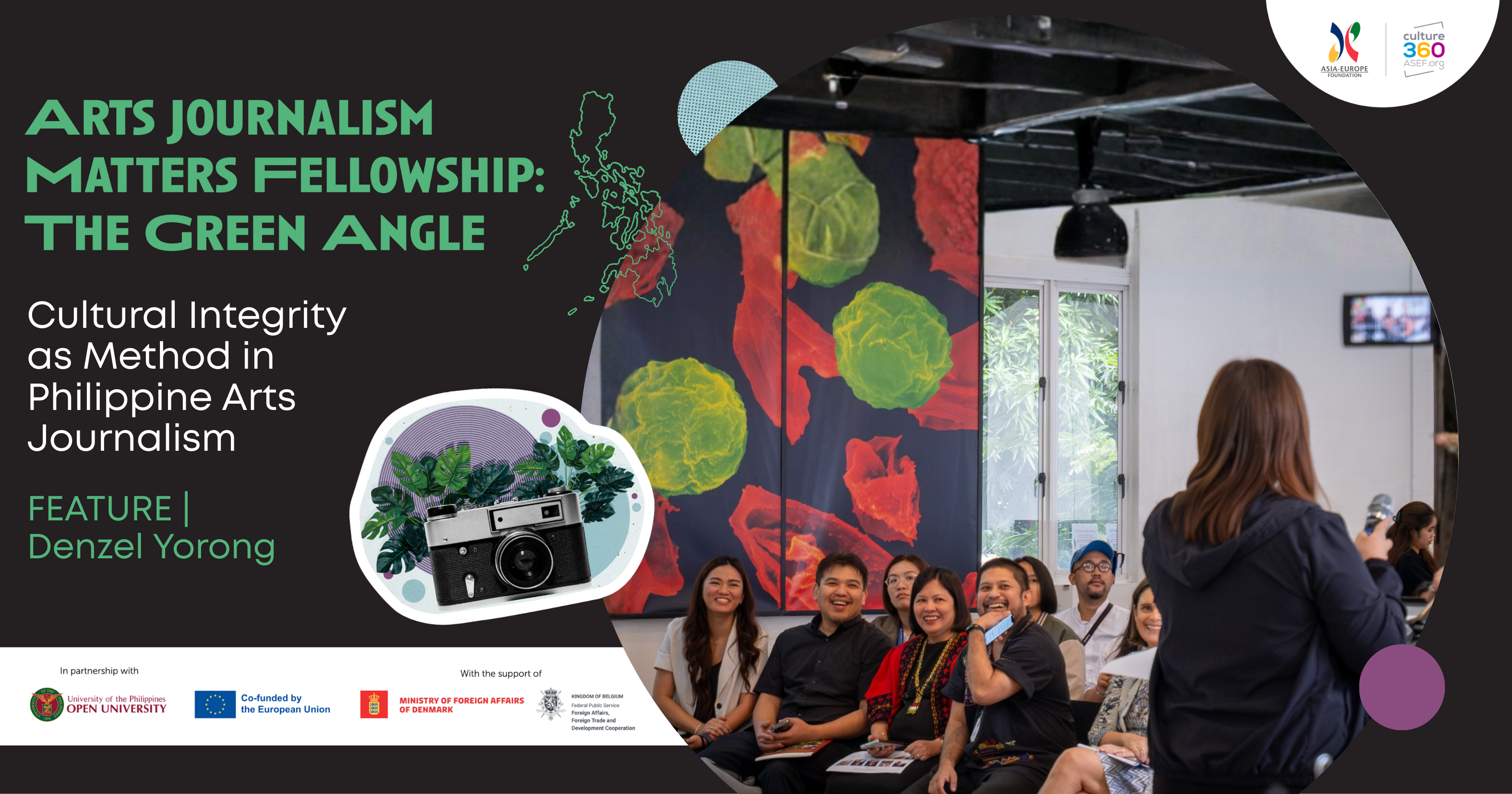
Cover image: Attendees and speakers gather in lively attention during the opening of the Philippines Green Guide Launch and Roundtable, setting the tone for a shared conversation on sustainability, creativity and cultural responsibility. Photo © Christian Paul Velo.
Links for Further Reading
-
Modernising Protections of Traditional Knowledge: Batek and IPRA in the Digital Economy
- Creative Responses to Sustainability | Green Guide for the Philippines launched!
About the Author
Denzel Yorong (b. 1997) is an independent writer and media producer. He is a finalist for the 2025 Ateneo Art Awards - Purita Kalaw-Ledesma Prizes in Art Criticism. His interests lie at the intersection of cultural governance, intellectual property, and artistic labor.